Silk Road: Tashkent - Khiva - Bukhara - Samarkand
Departure: March 20, 2027
Circuit details
- International flights with Turkish Airlines in economy class.
- Domestic flight Tashkent-Urgench in economy class.
- Airport/hotel/airport transfers.
- Air-conditioned transportation.
- 6 nights hotel accommodation with breakfast.
- 6 lunches.
- Local Spanish-speaking guide during visits.
- Entrance fees to monuments, museums, and historical sites (unless otherwise specified in the itinerary).
- Travel assistance insurance.
-Visa processing (currently free for tourists with Spanish nationality).
-Tour guide from Spain.
-Drinks during lunches.
-Personal expenses.
-Service tax (€50 per person, payable locally).
-Optional insurance.
-Permits and taxes at historical sites for taking photographs (payable locally).
-Any other service not specified as included.
-International flights: once issued, tickets are non-refundable. Name change not permitted.
-Domestic flight: 100% penalty if cancellation occurs less than 65 days prior.
-Land services:
*From the moment of confirmation, €30 per booking.
*Up to 46 days prior to tour departure: Free cancellation.
*Between 45 and 31 days prior to tour departure: 30% penalty of the total amount.
*Between 30 and 21 days prior to tour departure: 60% penalty of the total amount.
*Between 20 and 3 days prior to tour departure: 70% penalty of the total amount Total.
*Within 48 hours prior to the start of the circuit: 100% penalty.
*In case of NO SHOW: 100% penalty.
-Guaranteed departure with a minimum of 25 passengers. If this minimum is not reached, please consult your Travel Agency regarding any applicable supplements.
-The order of visits may vary, but the itinerary will always remain the same.
-Possible changes to accommodations: If it is not possible to confirm the planned hotels, an alternative will be offered to the client in the same category booked.
-Hotels: Hotels in Uzbekistan are very basic, almost all low-rise buildings without elevators. Hotel categories are based on Uzbek regulations, and most hotels are privately managed and have no star rating. Hotel quality does not correspond to European standards. As a general rule, hotel rooms will be available from 2:00 PM and must be vacated by 12:00 PM on the day of departure. Triple rooms: Triple rooms are practically nonexistent in Uzbekistan. They will always be double rooms and at most will have a rollaway bed or sofa bed for the third person, so we do not recommend them for three adults. Packing tips: We recommend light and comfortable clothing, such as shirts, cotton suits, sun hats, and comfortable shoes for walking in summer. Sunscreen is also recommended. When visiting certain monuments and places of worship, we recommend that tourists wear clothing that covers the head, legs, and arms, especially women.
-Luggage: In case of delay or loss of luggage by the airlines, it is the passenger's responsibility to manage the claim and contact the airline directly to arrange for delivery or any applicable compensation. In Uzbekistan, you must go to the airport to retrieve delayed or lost luggage (unlike in Europe, where the airline takes care of delivering it to the passenger's hotel). Luxotour will not be responsible for any claims related to lost, delayed, or damaged luggage.
-People with reduced mobility: Many places, hotels, and transportation options are not wheelchair accessible. Please check and notify us before making your reservation. Any additional expenses for assistance required during the tour will be the responsibility of the client. Special Dietary Requirements: Food intolerances (allergies, celiac disease, vegetarian, etc.) must be communicated before arrival in Uzbekistan. However, it is not possible to guarantee any special diet or menu, as the variety of menus is not very extensive. If such a request is received, the restaurants will be notified so they can try to adapt the agreed-upon menu as much as possible. If the passenger wants something different from what is offered on the menus, they will be responsible for any additional costs that the restaurants may charge. In these cases, the guide will assist passengers whenever possible in finding the best menu options for meals, but it is important to keep in mind that the final responsibility lies with the passengers themselves.
-Tips: We know this is a very sensitive issue, but due to the high demand for the destination and the limited supply of Spanish-speaking guides, professional guides only work with groups where tips are guaranteed. Therefore, to avoid any problems, please note that each passenger will need to tip €45 (per person) upon arrival in the country for the guide, drivers, and porters in hotels without elevators.
-Consumer Withdrawal: The tour is sold as a fixed package, so there will be no refunds or discounts for services that clients choose not to use or cannot participate in due to personal or medical reasons, flight schedules, or other events.
-Conduct During the Trip: In the event of If a passenger's behavior jeopardizes the tour's operation and/or causes inconvenience to the rest of the group or the hotels, they will be forced to leave the tour without any discount or refund for services they are unable to enjoy.
-Credit Card: Hotels generally require a credit card or cash deposit as a guarantee to provide services such as phone calls, extras in bars and restaurants, minibar, laundry, room service charges, etc.
-Personal Documentation and Entry Requirements for Uzbekistan: It is the client's responsibility to be informed about the current entry and exit regulations for the country they are traveling to, as well as to carry the personal documents required by the authorities. Luxotour assumes no responsibility in this regard. Please note that visa, transit, and entry regulations vary from country to country and may be subject to change at short notice.
This program does not have a discount for children.
Day 1: MADRID - TASHKENT
Flight from your hometown to Madrid-Barajas Airport.
Departure on a Turkish Airlines flight to Istanbul, where you will connect to another flight to Tashkent. Overnight on board.
Day 2: TASHKENT
What will you see today?
Day 3: TASHKENT - URGENCH - KHIVA
What will you see today?
Day 4: KHIVA - BUKHARA
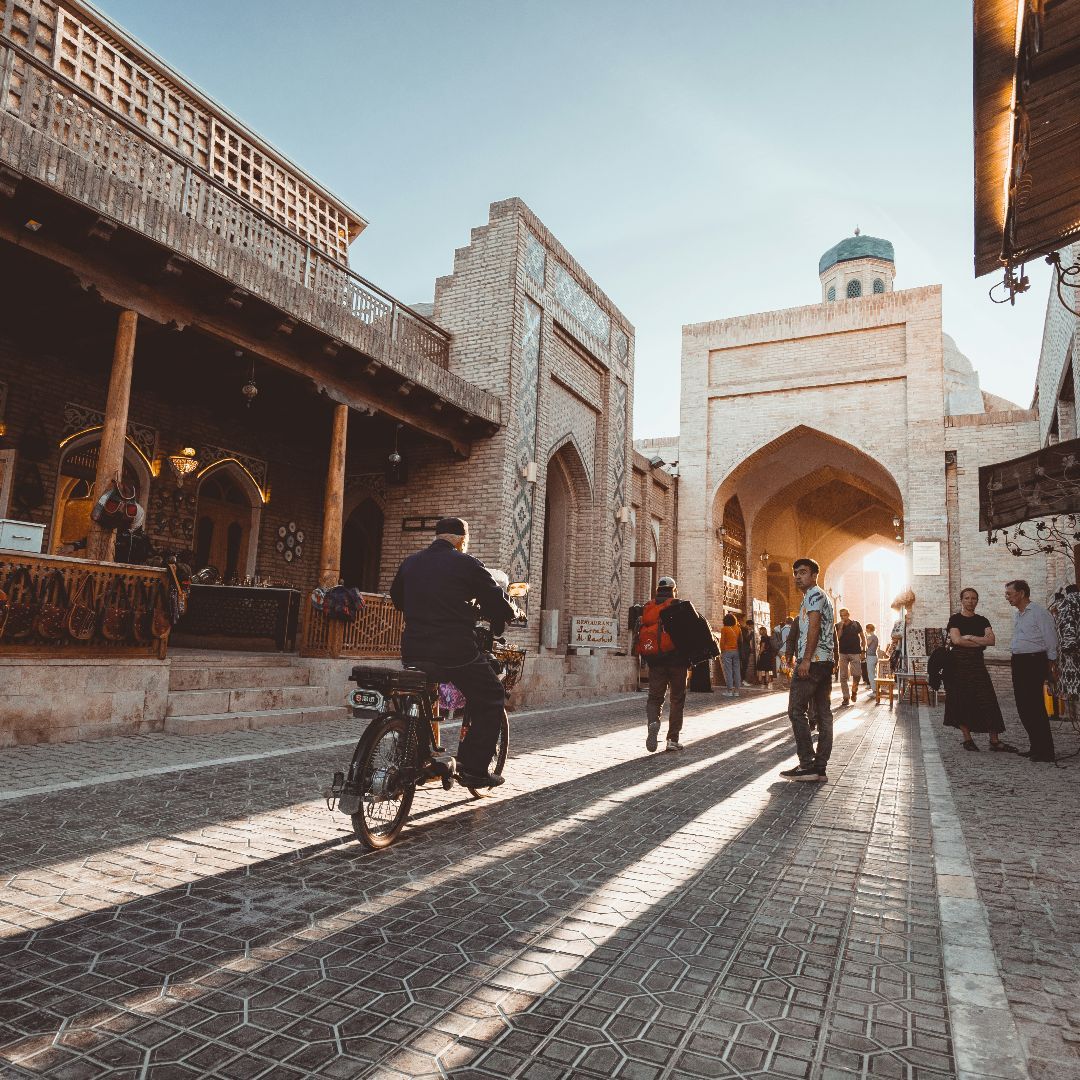
Breakfast and departure by road to Bukhara. Today we will travel 450 km, a journey of 7 to 8 hours. The trip crosses the Kyzyl Kum Desert (“Red Sands”), one of the largest in Central Asia, where you can observe the arid landscapes characteristic of the ancient Silk Road. The journey offers the opportunity to imagine how the ancient caravans traveled between Khiva and Bukhara, crossing these immense plains. Lunch en route at a simple cafe with a basic local menu. Arrival at the hotel in Bukhara in the afternoon. After a rest following the long journey along the Silk Road, we will depart for a pleasant evening stroll through the charming city of Bukhara, enjoying its magical atmosphere and illuminated monuments. Overnight stay.
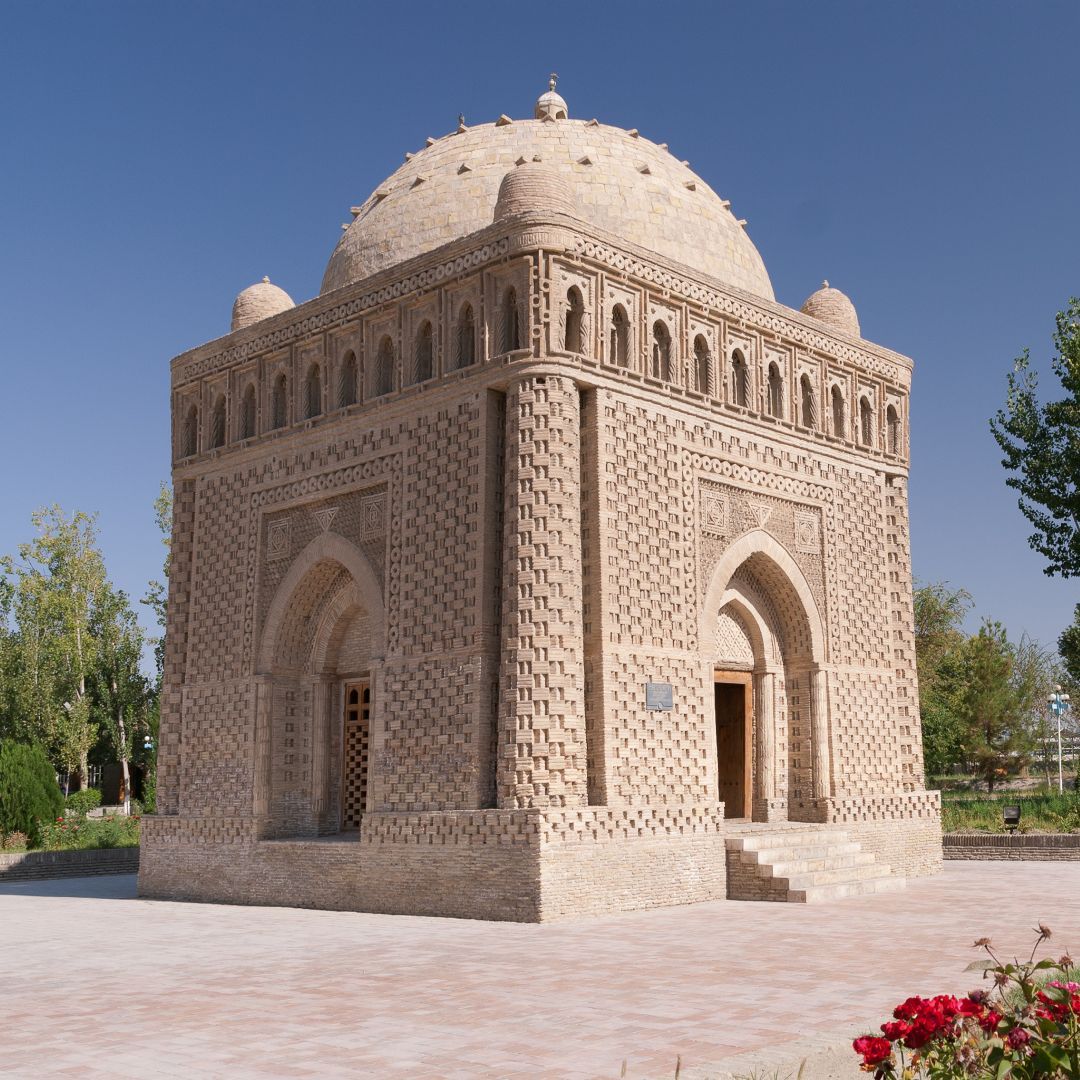
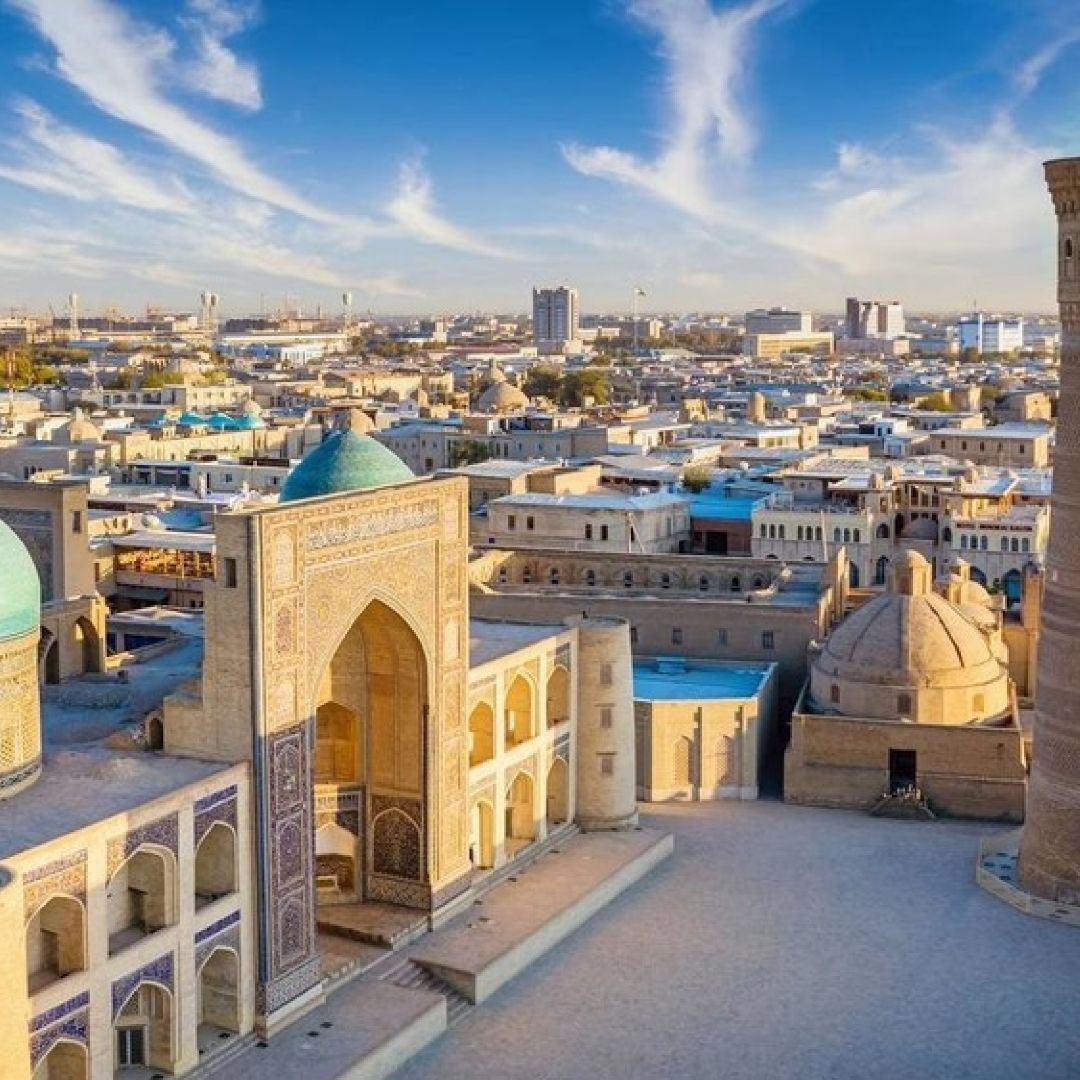
Bukhara: Noble, the sacred pillar of Asia. The legendary city of the Great Silk Road.
The only city in Central Asia with nearly 2,000 UNESCO World Heritage sites, and you can still feel the ancient atmosphere wandering through the old town.
What will you see today?
Day 5: BUKHARA
What will you see today?
Day 6: BUKHARA - SAMARKAND
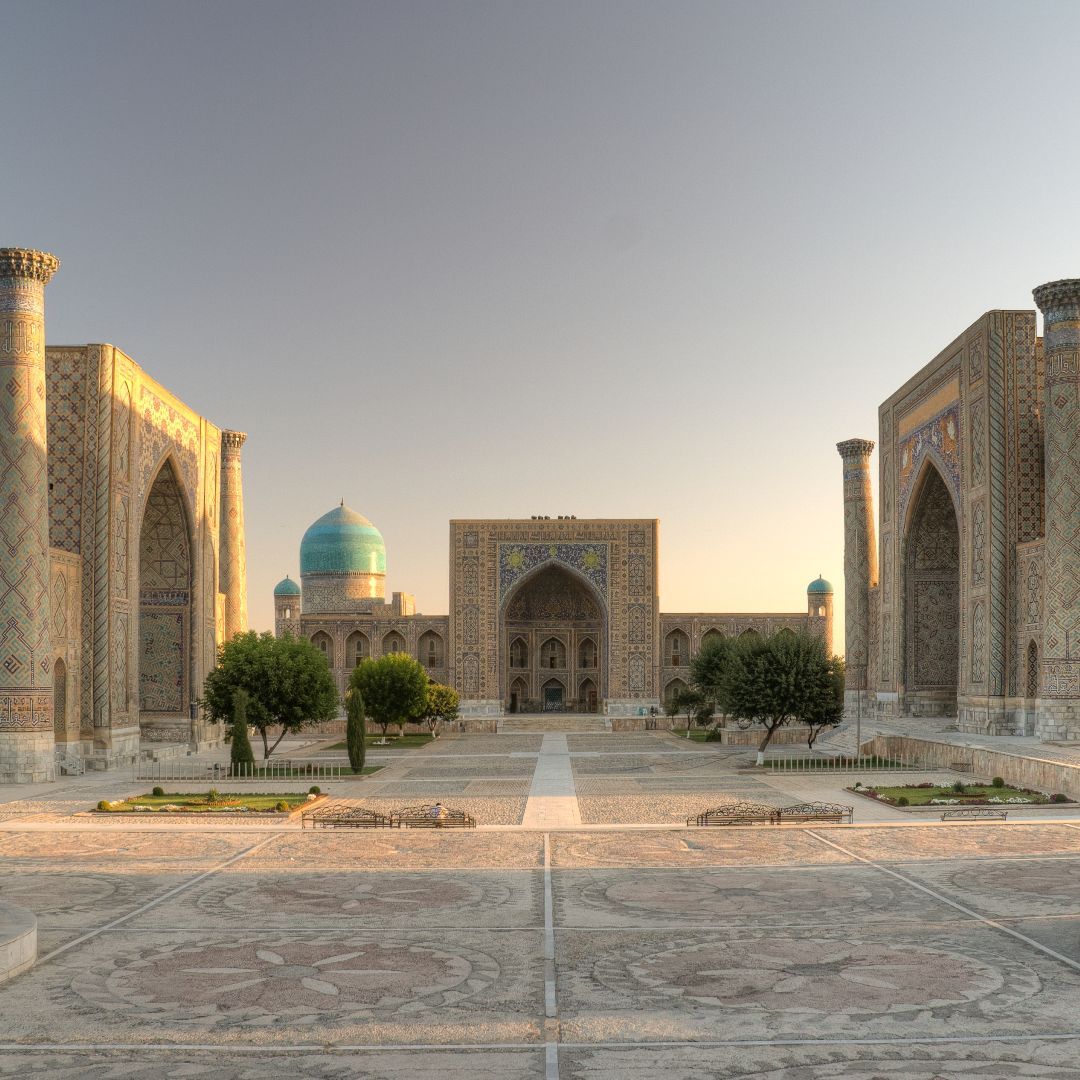
Breakfast at the hotel and departure to conclude the visit to the Lyabi Hauz Architectural Complex (16th-17th centuries), the heart of the city, which includes the Kukeldash Madrasa (exterior visit) and the Nodir Devon Begi Madrasa, built around the city's largest pond. Afterward, we visit Bukhara's oldest mosque – the Magoki Attory Mosque (12th century) (exterior visit). Lunch at a local restaurant and departure by road to Samarkand. Arrival and check-in at the hotel. In the evening, we will enjoy the magic of the Registan night (from the viewpoint), a nighttime visit to Registan Square to enjoy its spectacular music and light show. Overnight stay.
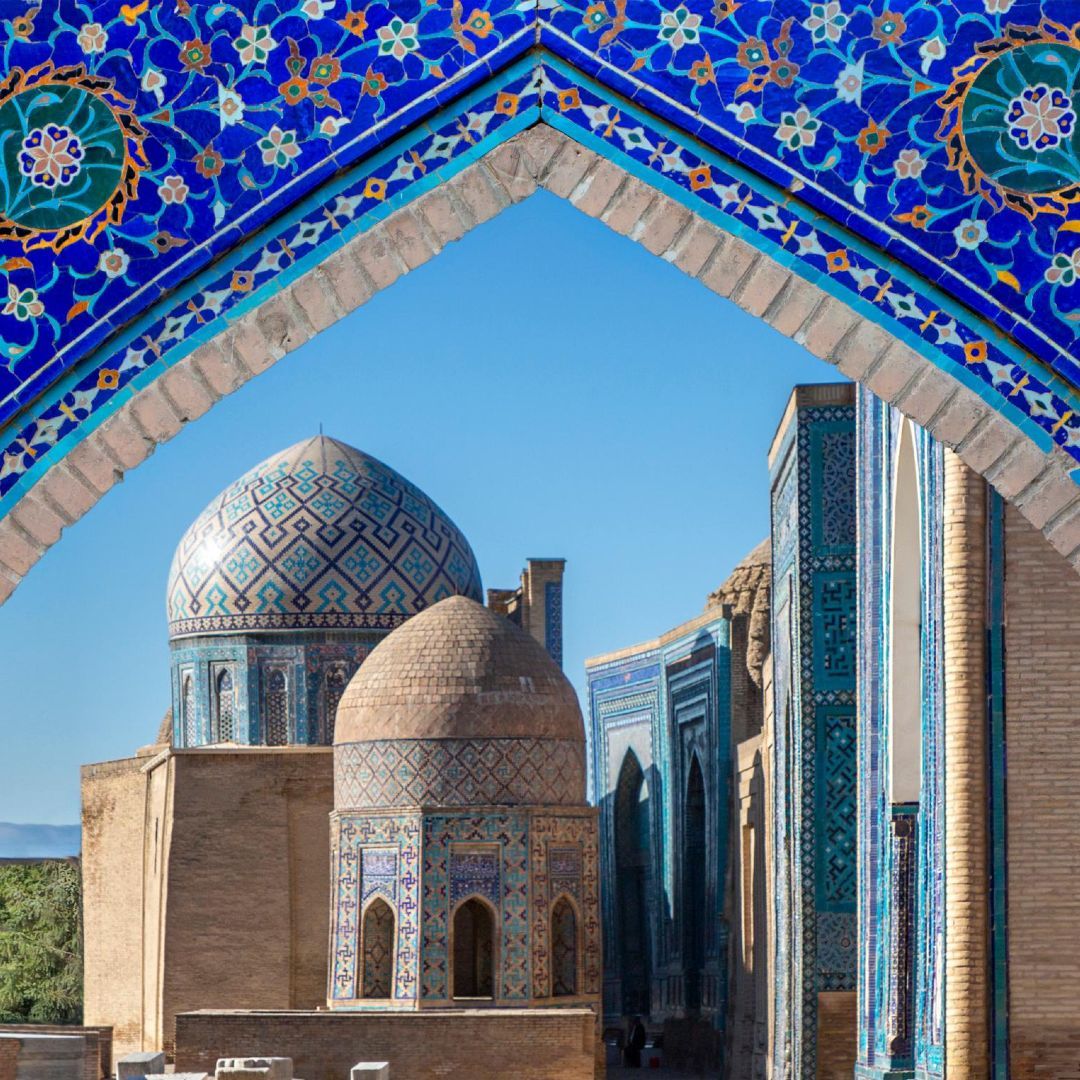
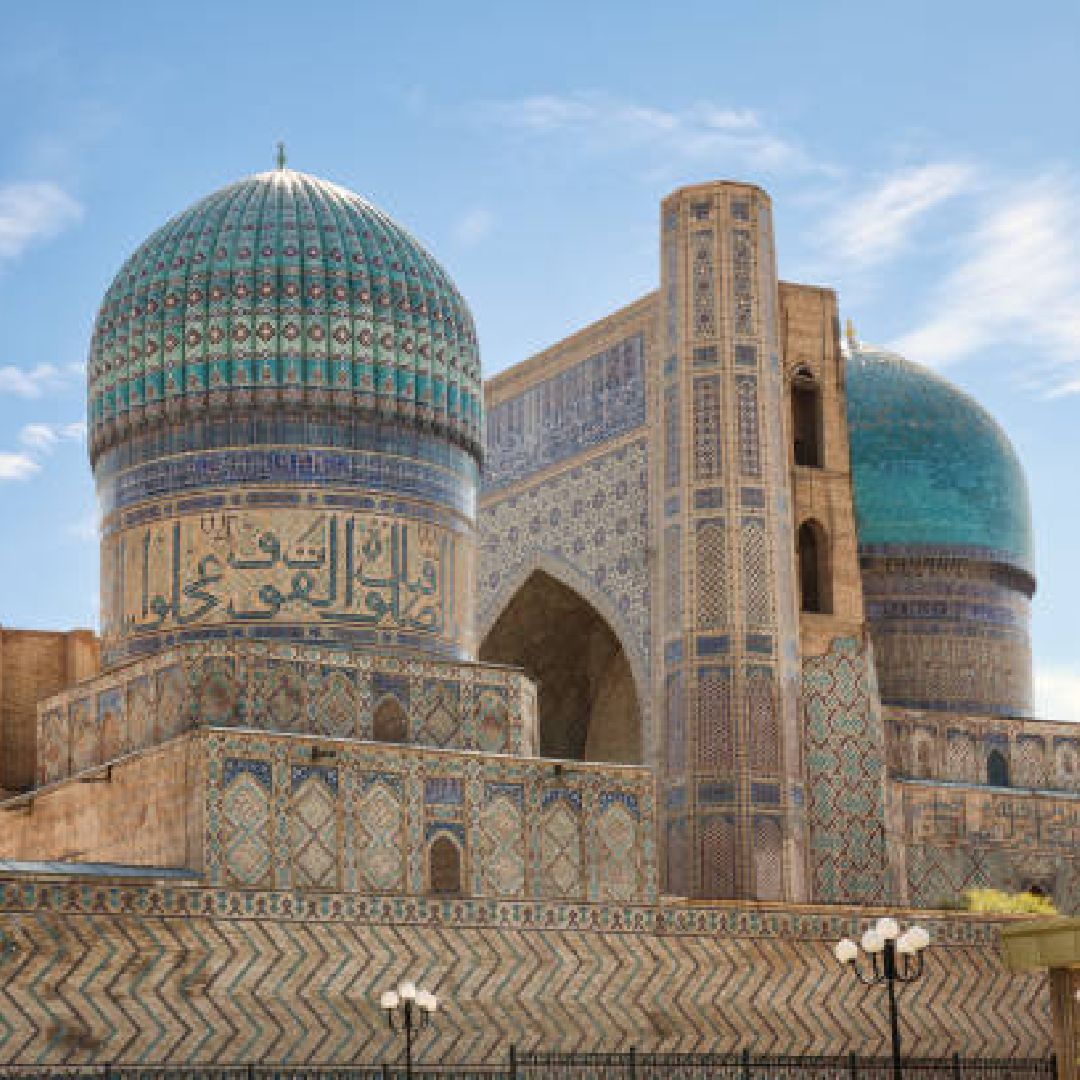
Samarkand, the birthplace of Tamerlane. For more than two thousand years, this city was a key point on the Great Silk Road between China and Europe, as well as one of the main centers of science and culture in the medieval East.
In the 14th century, Samarkand became the capital of Timur's empire and the Timurid dynasty. The city is a UNESCO World Heritage Site due to its impressive material and spiritual legacy, magnificent monuments of ancient architecture, heritage of important schools of science and art, and national craft centers that have given Samarkand worldwide renown.
What will you see today?
Day 7: SAMARKAND
What will you see today?
Day 8: SAMARKAND - MADRID
In the early morning, transfer to Samarkand airport for your Turkish Airlines flight to Istanbul, where you will connect with your return flight to your city of origin.