Luxotour
Luxotour
/Asia
/Vietnam
/Hoi An

Hoi An

It is a small city located on the coast of the South China Sea, in the central area of Vietnam, known for its ancient city, which is in good condition and is crossed by canals. In the 1st century, the city had the largest port in Southeast Asia located at the mouth of the Thu Bon River. During the 16th and 17th centuries, it was an important trading center in which the Chinese, Japanese, Dutch and Indians settled there. During this period of trade with China, the town was called Hai Pho (Coastal Town), which was originally a divided city; The Japanese settlement was on the other side of the Japanese bridge. The cosmopolitan history of the former port city is reflected in its architecture, a fusion of eras and styles, from temples and wooden Chinese shops to colorful French colonial buildings, to highly ornate Vietnamese tube houses and the striking Japanese covered bridge. In 1999, the ancient city was declared a World Heritage Site by UNESCO. Today, it is still a small city, although it attracts a large number of tourists. There are numerous internet cafes, bars and restaurants that have opened along the river bank.

Among its places of tourist interest we highlight:

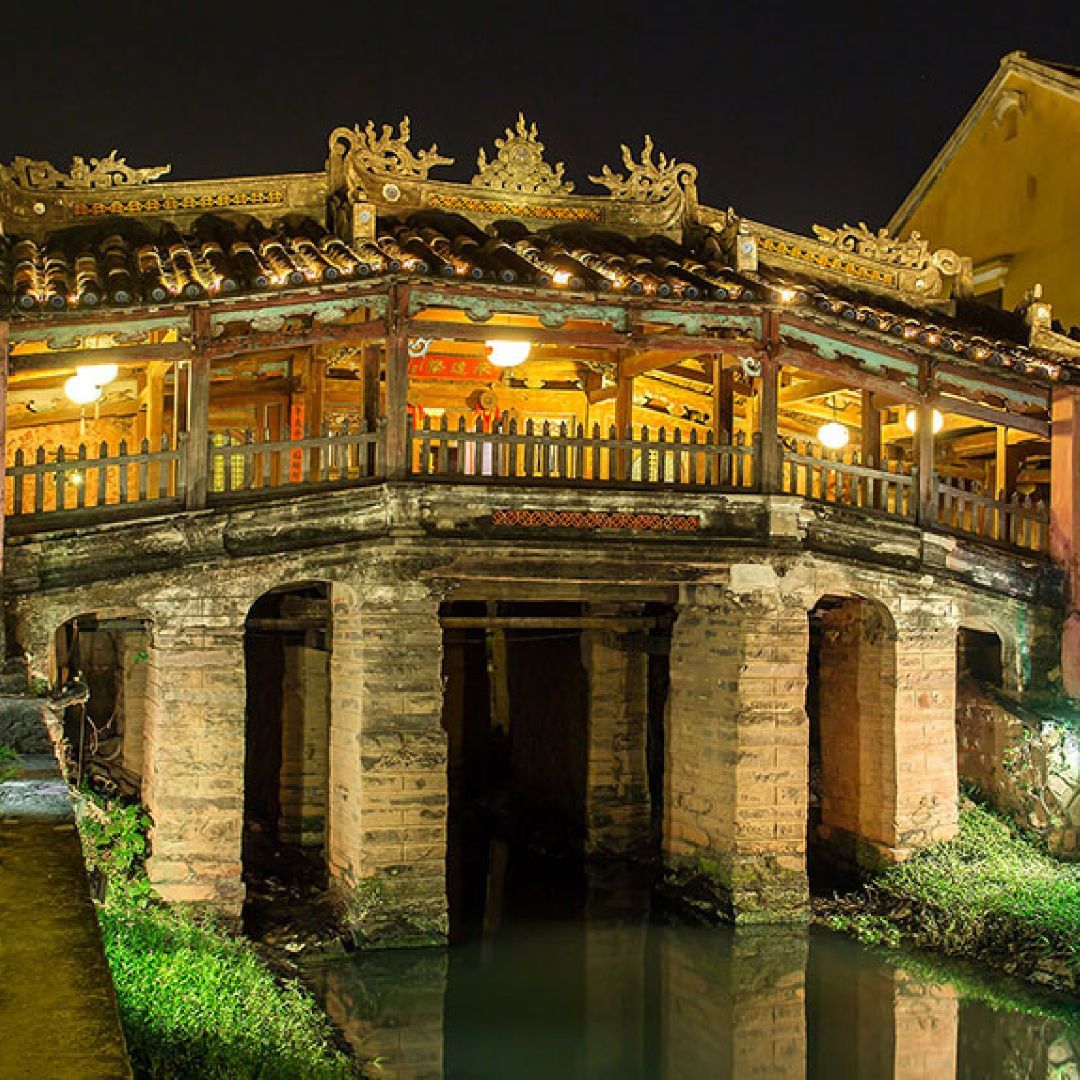
- Japanese Bridge :One of the most important historical monuments in the city. Its construction lasted from 1593 to 1595. It is an 18-meter-long stone structure covered by a wooden roof built by the Japanese and the only bridge known to be linked on one side to a Buddhist pagoda. It divides two traditional neighborhoods, the Chinese and the Japanese. It is one of the few inhabited bridges in the world that is still preserved.

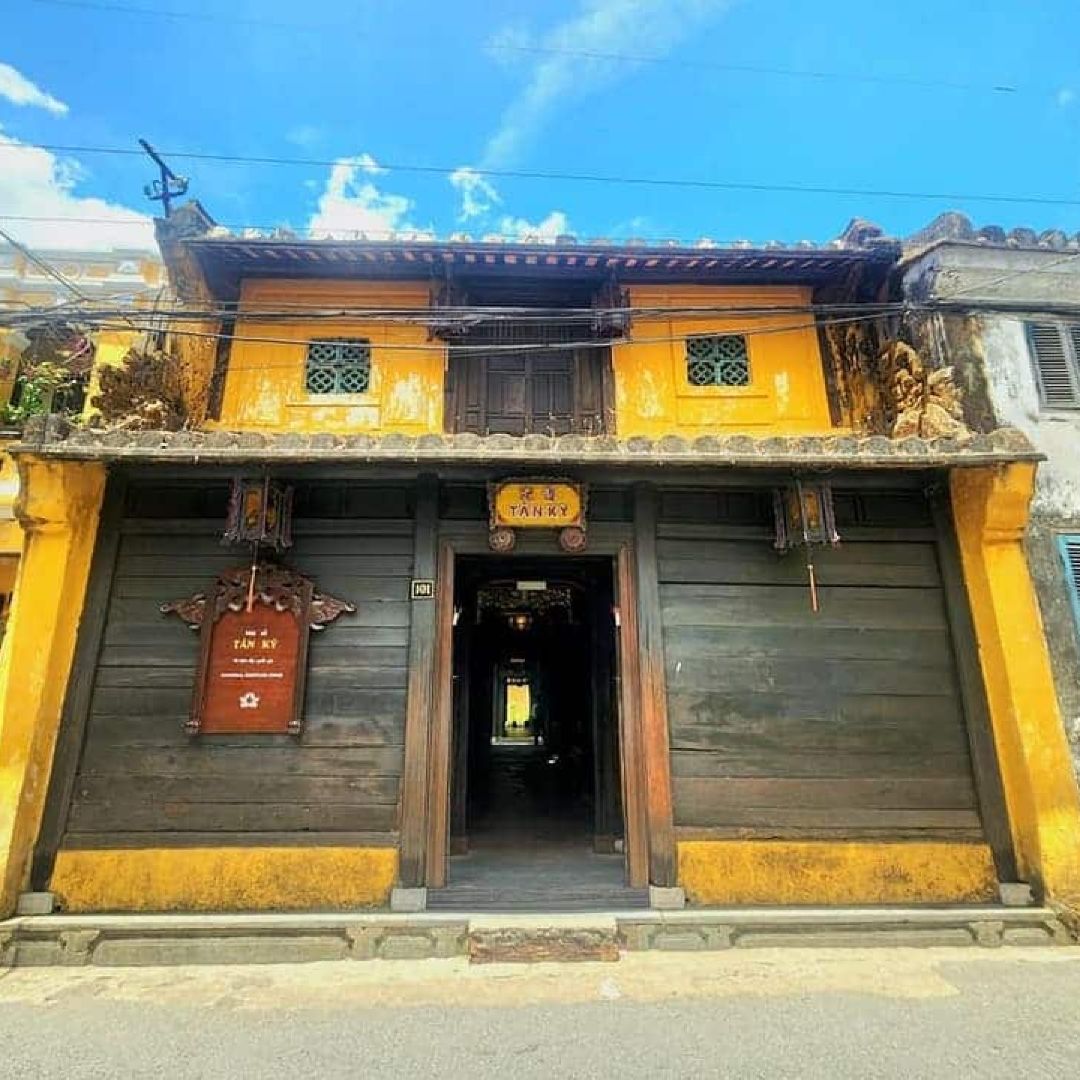
- Tan Ky House: It was built almost two centuries ago by a Chinese merchant and since then seven generations have lived in this property. It is one of the oldest and best preserved houses in the city and also the first to be classified as a national historical and cultural relic in 1985. The main façade faces the commercial street and the rear façade faces the Thu Bon River to facilitate entry and exit of goods. Inside, there are Vietnamese, Japanese and Chinese elements. It has four small windowless rooms filled with beautiful antiques. They are mainly made of wood by the brilliant craftsmen of Kim Bong, a traditional craft village located at the gates of Hoi An. In addition, you can admire magnificent ceramics from the Thanh Hoa pottery village near Hoi An but also from the famous pottery village from Bat Trang, near Hanoi.

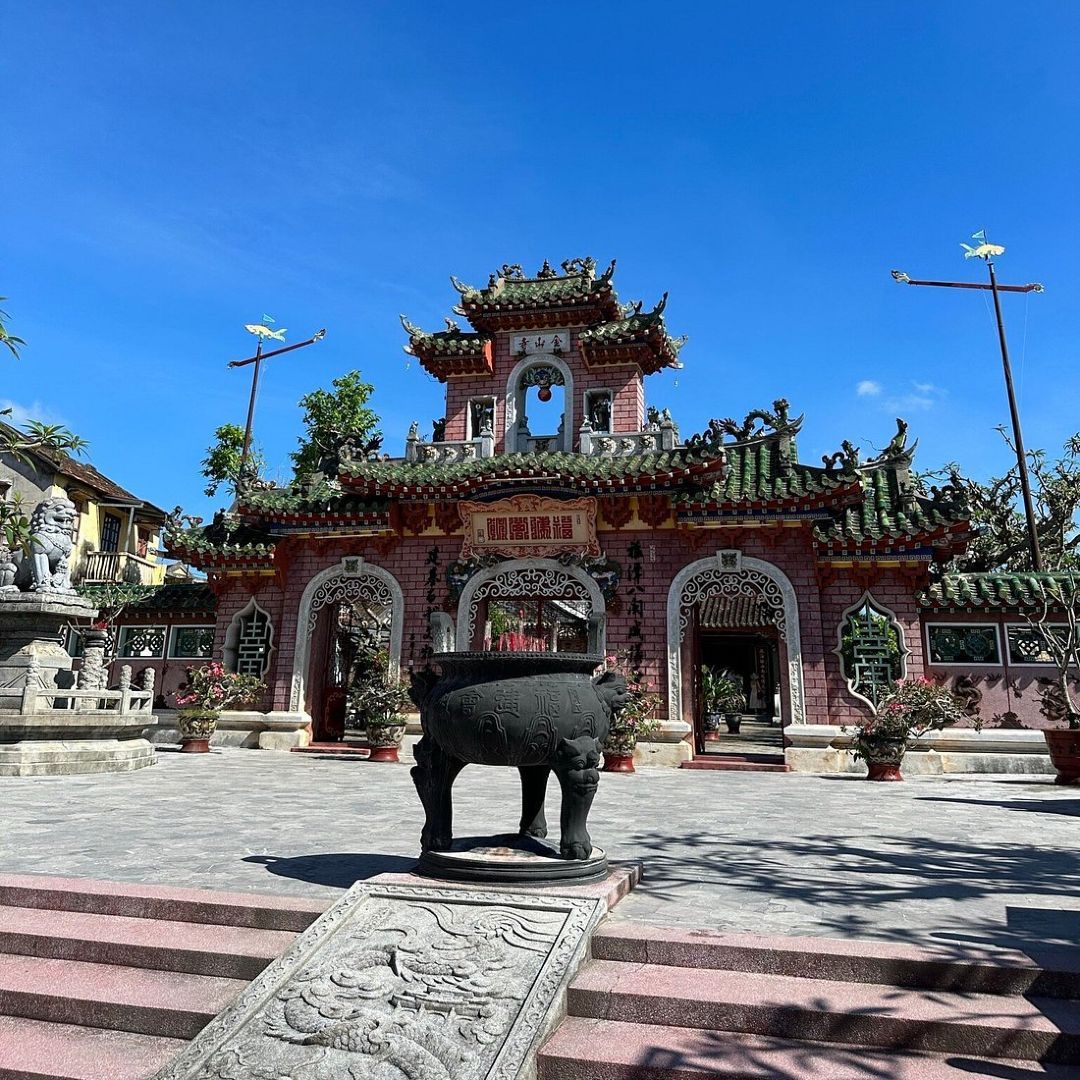
- Phuc Kien Temple: It was originally a thatched pagoda called Kim Son, built by the Vietnamese who They lived in Hoi An in 1692, intended for the worship of Buddha. It was devastated by a storm and in its place, the temple was built in 1697 by families of the Ming dynasty from Fujian in China who settled in Hoi An to take advantage of the prosperity of this commercial port that was on the maritime trade routes between China. , Southeast Asia, India, the Middle East and also Europe. Famous for its magnificent beauty, splendor and majesty, it is a grand space with unique and refined Chinese architecture. It was dedicated to the sea goddess, Thien Hau, to attract the good genies of the sea. There are two protective figures: Thien Ly Nhan, with a green face, whose sight reaches a thousand places, and Thuan Phong Nhi, with a red face, whose hearing reaches a thousand places. It has a majestic bright pink portico. Its design and architecture contains many animal symbols and 3 altars in its backyard.

Programs at Hoi An

Exotic Vietnam

Departures: Every Tuesday of the year.Ho Chi Minh City - Mekong Delta - Hoi An - Da Nang - Hue - Hanoi - Halong BayA trip that incorporates the highlights
9 nights€1,925per person

Super Vietnam

Departures: Every Monday of the year.Hanoi - Halong Bay - Da Nang - Hoi An - Hue - Ho Chi Minh City - Mekong DeltaA tour of Vietnam's most popular
9 nights€2,300per person

Landscapes and ethnicities of Vietnam

Hanoi - Sapa - Hanoi - Halong Bay - Da Nang - Hoi An - Hue - Ho Chi Minh City - Mekong DeltaA north-to-south journey through the highlights of
11 nights€2,467per person

Super Vietnam and Cambodia

Departures: Every Monday of the year.>Hanoi - Halong Bay - Da Nang - Hoi An - Hue - Ho Chi Minh City - Mekong Delta - Siem ReapA trip that
11 nights€2,666per person

What to see in Hoi An?

Japanese bridge in Hoi An

The Japanese Bridge in Hoi An is an iconic covered bridge built in the 16th century to connect the Japanese and Chinese quarters of the city. It is a historical and tourist symbol of Hoi An. Its construction lasted from 1593 to 1595. It is an 18-meter-long stone structure covered by a wooden roof, built by the Japanese to unite their community with the Chinese quarter, and is unique in that it is connected on one side to a Buddhist pagoda. It is one of the few inhabited bridges in the world that is still preserved.

Tan Ky House

Built over two centuries ago by a Vietnamese merchant family, this property has been home to seven generations. It is one of the oldest and best-preserved houses in the city, and was the first to be classified as a national historical and cultural landmark in 1985. The house blends Chinese and Japanese influences. The main facade faces the commercial street, while the rear faces the Thu Bon River to facilitate the movement of goods. Inside, there are Vietnamese, Japanese, and Chinese elements. It has four small, windowless rooms filled with beautiful antiques. These are primarily made of wood by the skilled artisans of Kim Bong, a traditional craft village located just outside Hoi An. In addition, one can admire magnificent ceramics from the pottery village of Thanh Hoa near Hoi An, as well as from the renowned pottery village of Bat Trang, near Hanoi.

Phuc Kien Temple

Originally a thatched pagoda called Kim Son, built by Vietnamese people living in Hoi An in 1692 for the worship of Buddha, it was destroyed by a storm. In its place, the temple was built in 1697 by Ming Dynasty families from Fujian, China, who settled in Hoi An to take advantage of the prosperity of this trading port, located on maritime trade routes between China, Southeast Asia, India, the Middle East, and Europe. Famous for its magnificent beauty, splendor, and majesty, it is a large space with unique and refined Chinese architecture. It was dedicated to the sea goddess Thien Hau to attract benevolent sea spirits. There are two guardian figures: Thien Ly Nhan, with a green face, whose sight reaches a thousand places, and Thuan Phong Nhi, with a red face, whose hearing reaches a thousand places. It boasts a majestic, bright pink portico. Its design and architecture contain many animal symbols and 3 altars in its backyard.

Phung Hung (former merchants' house)

The Old Phung Hung House is a typical 18th-century Vietnamese urban merchant house belonging to an eighth-generation sailor. It is listed as a historical monument of Vietnam and is considered a symbol of the diversity of peoples who inhabited Hoi An when the city was a major maritime crossroads. With its unique architecture, the Old Phung Hung House blends Vietnamese, Chinese, and Japanese architectural styles. The building rests on 80 wooden and iron pillars set upon a marble base. Its balcony and doorway system is inspired by Chinese architecture. The roof is inspired by Japanese architecture, while the remaining wooden lines, beams, stringers, and the traditional two-way roof at the front and back are inspired by Vietnamese style. The different floors are designed in two distinct styles: the Japanese style of four-sided roof is seen on the ground floor, and the Chinese design of rounded roofs resembling a tortoise shell is present on the upper floor. Its ingenious ventilation system, with its yin-yang tile arrangement, allows for good air circulation, especially during the hot summer months. Today, part of the house is used as a workshop for traditional Vietnamese embroidery. This is a way for the family to raise money to finance the house's expensive upkeep.
prev
next

Destinations related to Hoi An

Asia

Vietnam

prev
next
[email protected]
+34 952 386 777
Circuits
Getaways
Beaches
Safaris
Combined
Special departures
Weekends
Extensions from Marrakech
Mini-vacations
Private circuits
Sports
Destinations
Trips of more than a week
Trips of less than a week
one week trips
A couple
Families
  • ES
  • PT
  • EN
  • FR
Luxotour
Copyrights © LUXOTOUR S.A.U - AN -2906 1-1
General conditions
Privacy Policy
Legal notice