Carthage
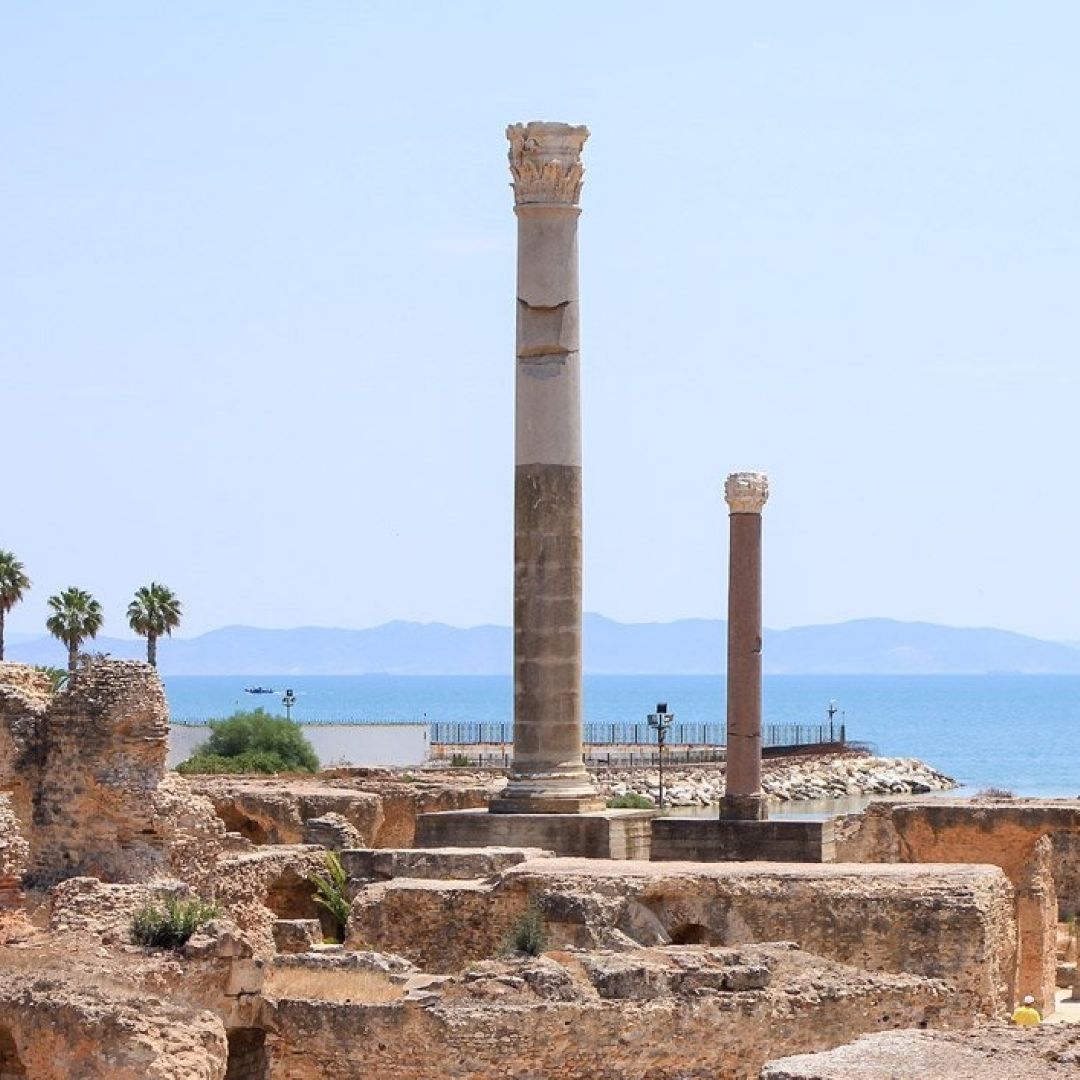
It was an ancient city in North Africa, capital of the Punic State, in modern-day Tunisia (about 17 kilometers northeast of the capital). It was founded by Phoenician emigrants from Tire at the end of the 9th century BC, according to the most accepted modern dating. It was built on a promontory with sea entrances to the north and south. The location of the city made it the owner of the maritime trade of the Mediterranean, all ships that crossed it had to pass between Sicily and the coast of Tunisia. Two large artificial ports were built within the city, one to house warships and the other for merchant trade. The city had huge walls 37 kilometers long. It was one of the largest cities of the Hellenistic period and rivaled Alexandria for second place in the Roman Empire. Carthage resisted the siege by Roman soldiers for 6 days and, of the almost million inhabitants, only about 50,000 survived and were sold as slaves. The city was completely destroyed and the most valuable items were taken to Rome. Rome erased Carthage, its people and its culture from the map. Later, in its splendor during the rule of Rome, the city had more than 400,000 inhabitants, becoming the second most important city in the Empire. Currently, the peninsula where the ancient city is located is part of a luxurious residential suburb of the city of Tunis, where several embassies and the residence of the president of the Tunisian Republic have settled.