The best plans to discover Siem Reap
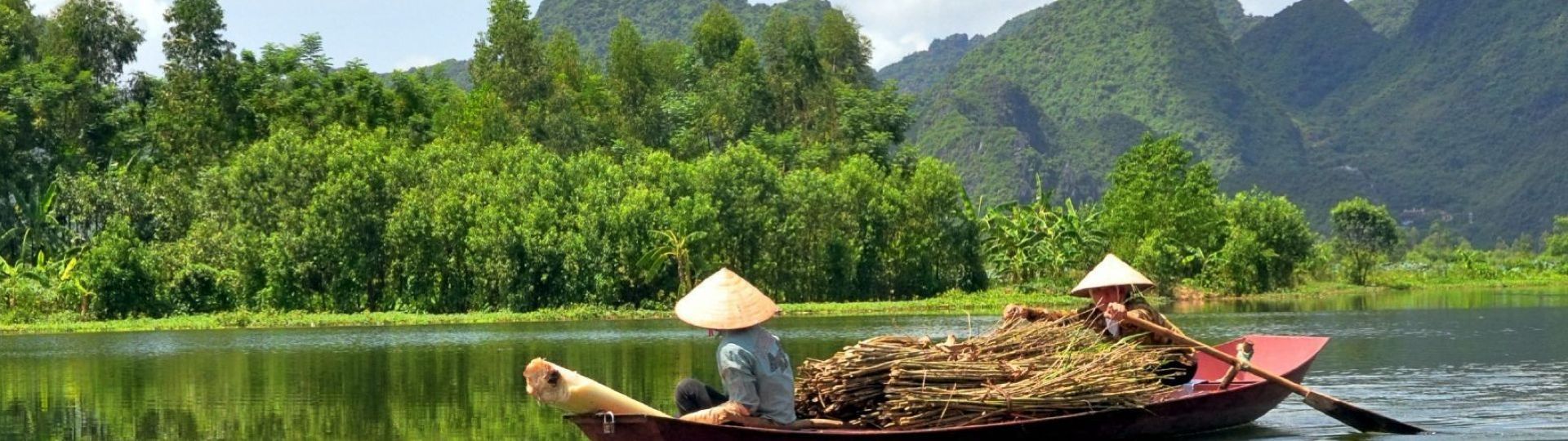
Super Vietnam and Cambodia
Departures: Every Monday of the year.>Hanoi - Halong Bay - Da Nang - Hoi An - Hue - Ho Chi Minh City - Mekong Delta - Siem ReapA trip that
11 nights€2,493per person

Classical Indochina
Departures: Every Saturday starting in April 2026.LAOS-VIETNAM-CAMBODIA: Luang Prabang - Hanoi - Halong Bay - Da Nang - Hoi An - Hue - Ho Chi Minh City - Siem ReapA
14 nights€3,770per person
What to see in Siem Reap?
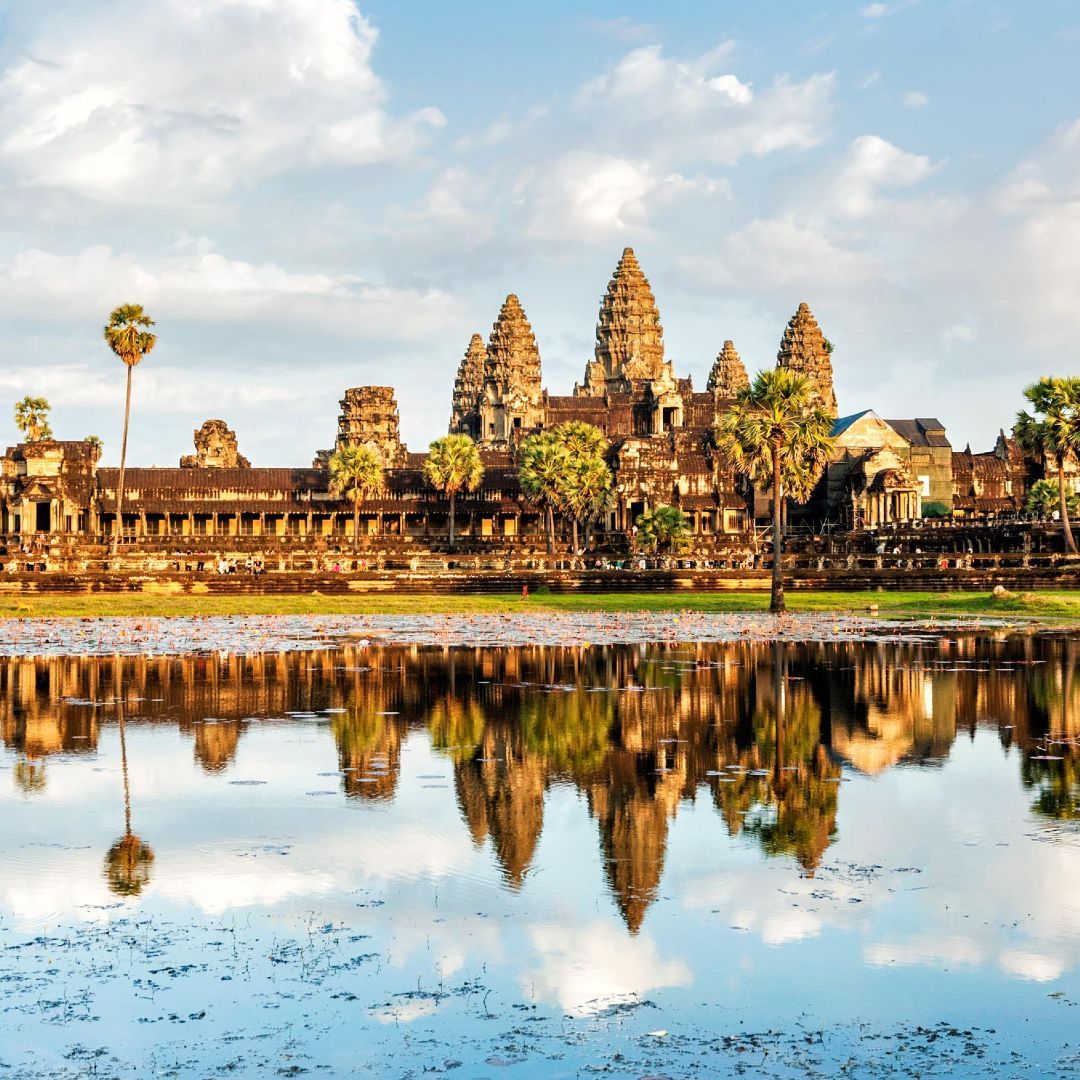
Angkor Wat Temple
Angkor is a region of Cambodia that housed the successive capitals of the Khmer Empire during its heyday. The so-called Angkorian Empire dominated Southeast Asia, from the China Sea to the Bay of Bengal, between the 9th and 15th centuries AD. Its monuments and temples, declared a World Heritage Site by UNESCO in 1992, are located near the current city of Siem Riep.This area has been recovered from the jungle recently, with the exception of its most important temple, the Angkor Wat temple which, although originally dedicated to the Hindu god Vishnu, was never abandoned, having been maintained for centuries by Buddhist monks. Angkor is an ancient Sanskrit word for city; The words thom and wat are from the current Khmer language for "big" and "pagoda" respectively. Thus, Angkor Thom can be understood as the Great City and Angkor Wat as the Temple City.Angkor Wat is the largest and best preserved Hindu temple of those that make up the settlement of Angkor. It is considered the largest religious structure ever built and one of the most important archaeological treasures in the world. The promoter of this gigantic temple was Suryavarman II. It covers an area of 200 square kilometers, although recent research speaks of a possible area of 3,000 square kilometers and a population of up to half a million inhabitants. It was the political and religious center of the Empire. The enclosure served as the main temple and also housed the royal palace. Despite the decline of the Empire and the abandonment of the temples over the centuries, Buddhist monks remained at Angkor Wat until the French rediscovered it. Various teams from various countries have intervened and restoration work in the temple is still continuing: a German team was in charge of restoring the reliefs of apsaras; An Italian team was in charge of the lake and several Japanese teams have carried out different interventions, highlighting the restorations of the northern corner of the west wall begun in 1995 and of the northern library. It has become a symbol of Cambodia, to the point of appearing on the country's flag. The well-known 5 towers represent the 5 peaks of Meru, the walls surrounding them are the mountains and the valley surrounding them is the ocean.
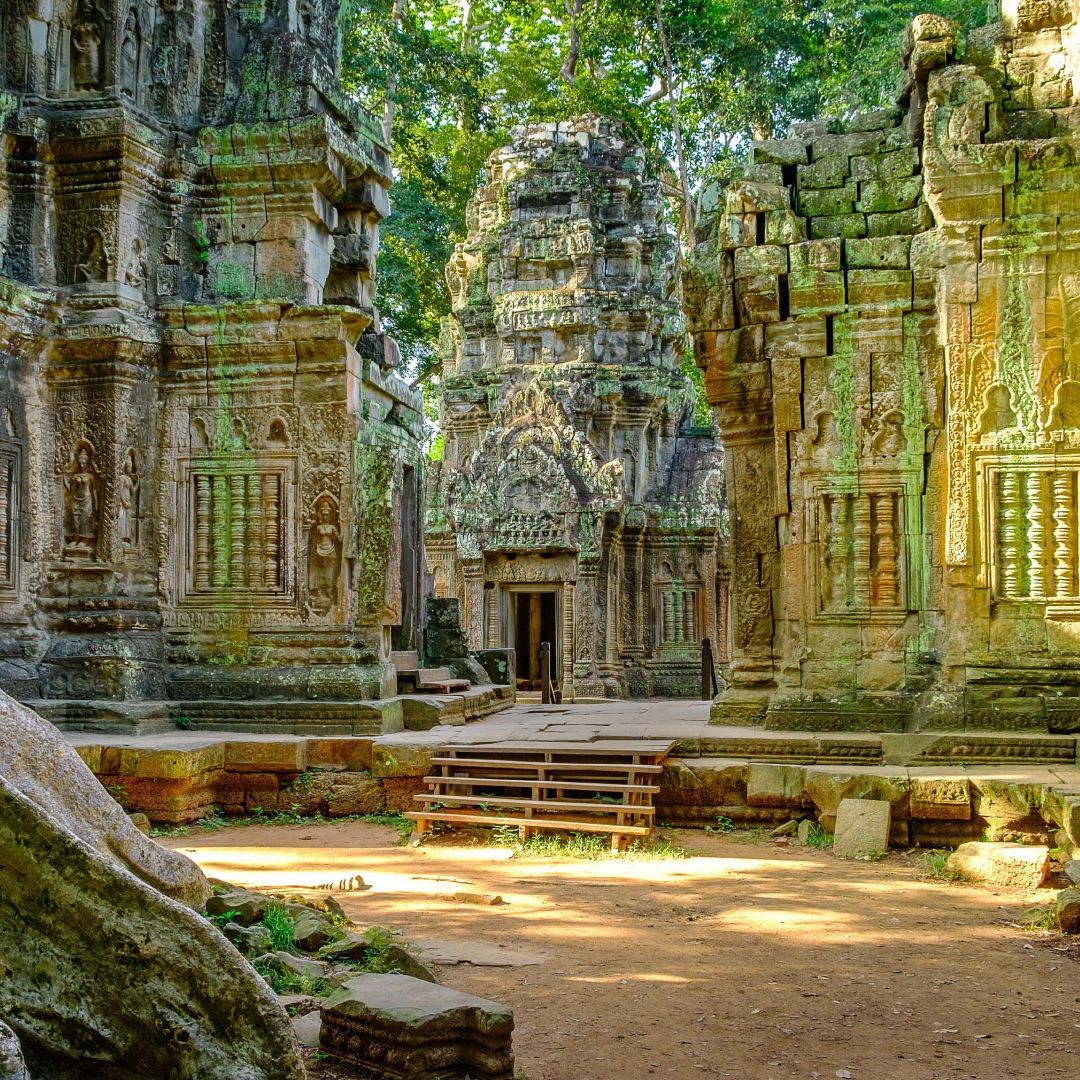
Ta Prohm Temple
It is a Khmer temple from the late 12th century located in the Angkor complex. Originally called Rajavihara (royal monastery), it served as a Buddhist monastery, housing at least 12,640 people. It was commissioned in 1186 by King Jayavarman II, who dedicated it to his mother. It is one of the most spectacular temples in the area, which has remained relatively unchanged from when it was discovered and still retains much of its mystery, as it is one of the few monuments that still offers a striking combination of ruins and nature, which They have made it one of the main tourist attractions in Cambodia.
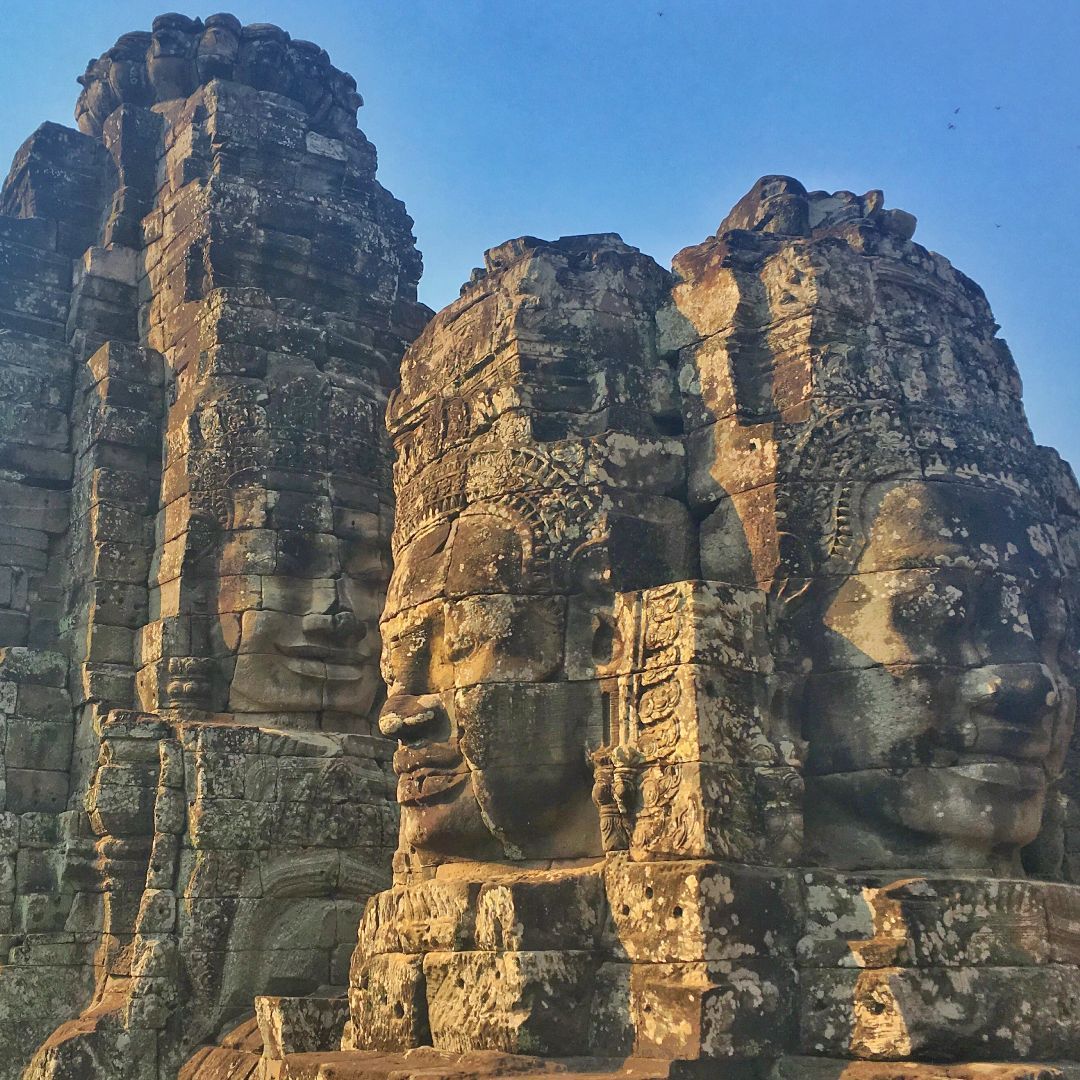
Bayon Temple
It is a cult complex in the center of the ancient city of Angkor Thom. Built in the late 12th century, it was completed during the reign of Jayavarman VII, one of the greatest kings of the Khmer Empire. It was created in Buddhist style and is best known for its 54 towers decorated with 200 gigantic stone smiling faces of Avolokitesvara, the bodhisattva of compassion.
prev
next