Luxotour
Luxotour
/Uzbekistan
/Khiva

Khiva

Khiva (Khiva), the city of the Thousand and One Nights.

This walled city, a UNESCO World Heritage Site, offers a unique experience with its mud-brick alleys and traditional architecture.

Located in the southwest of the country, it was the ancient capital of the historical region of Khorezm, as well as of the Khanate of Khiva.

According to legend, Khiva was founded on the site where Shem (Noah's son) dug the Keivah wells. The particularly arid region developed a complex irrigation system from the 2nd millennium BC. and was occupied by various conquerors: Persians, Greeks, Arabs, Mongols, and Uzbeks.

The Itchan Kala neighborhood is located in the inner part of the city of Khiva, entrenched behind stone walls that reach a height of about twelve meters. It is part of the ancient oasis that was the last stop for caravans before they entered the desert towards Iran. Although many of its ancient monuments are no longer preserved, the city is a coherent and well-preserved example of Central Asian Muslim architecture, with outstanding buildings such as the Djouma Mosque, mausoleums, madrasas, and the two magnificent palaces built at the beginning of the 19th century by Khan Alla-kouli. Since 1990, the Itchan Kala neighborhood has been a UNESCO World Heritage Site.

The best plans to discover Khiva
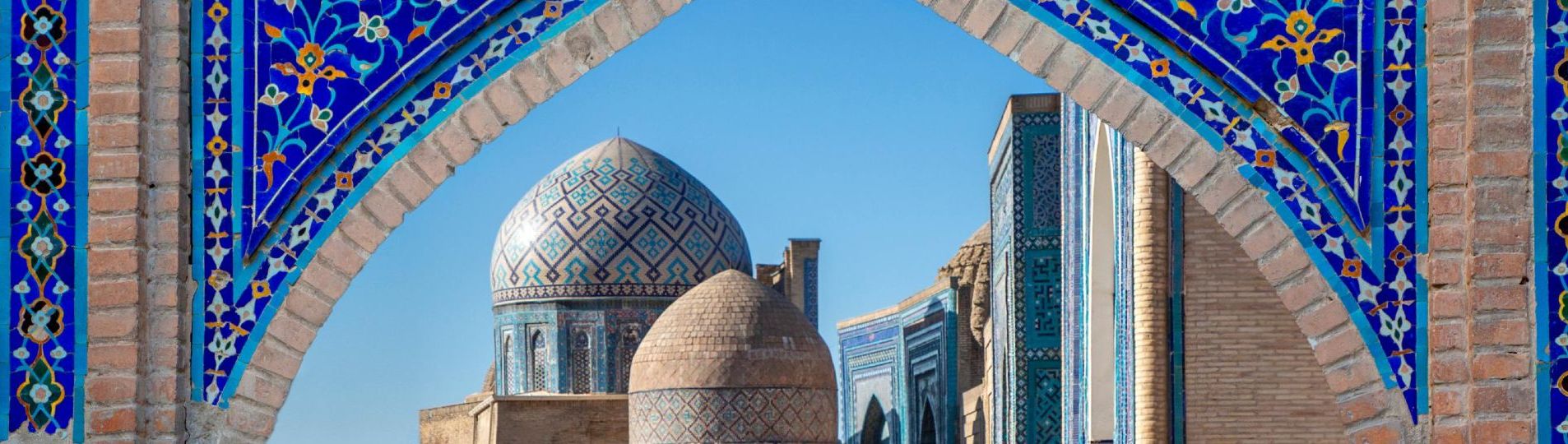
Uzbekistan, special departure from Seville

Group tour with accompanying guide from Seville.Departure: June 21, 2026
inventory_2local_activityperson_pin
7 nights€1,551per person

Wonders of Uzbekistan

local_activityinventory_2
7 nights€1,589per person

Uzbekistan and the Silk Road, from Khiva

local_activityinventory_2
7 nights€1,950per person

Uzbekistan and the Silk Road, from Tashkent

local_activityinventory_2
7 nights

What to see in Khiva?

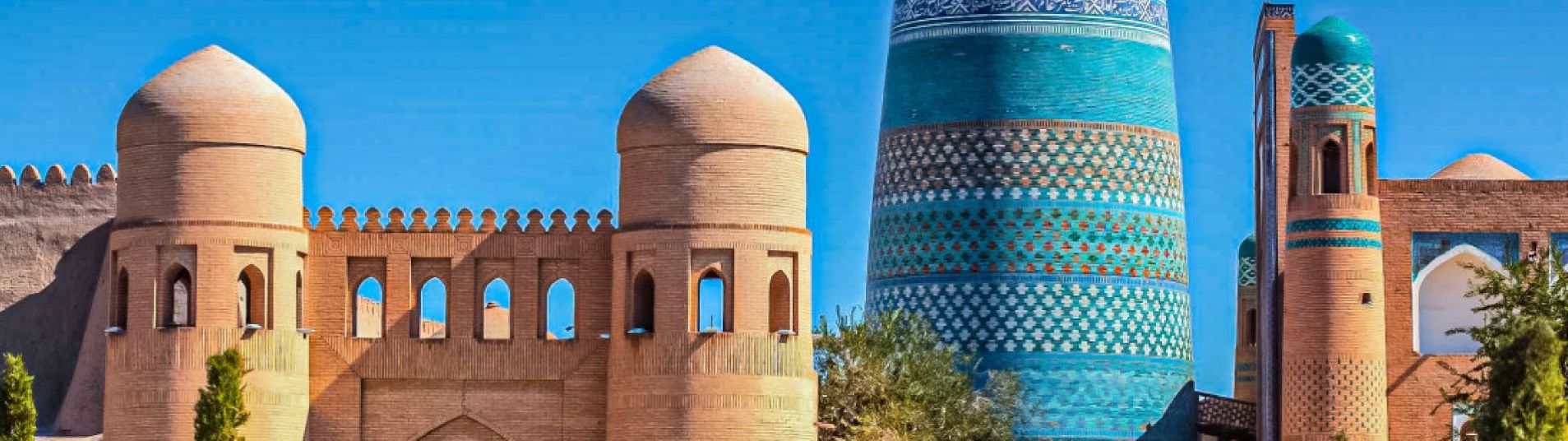
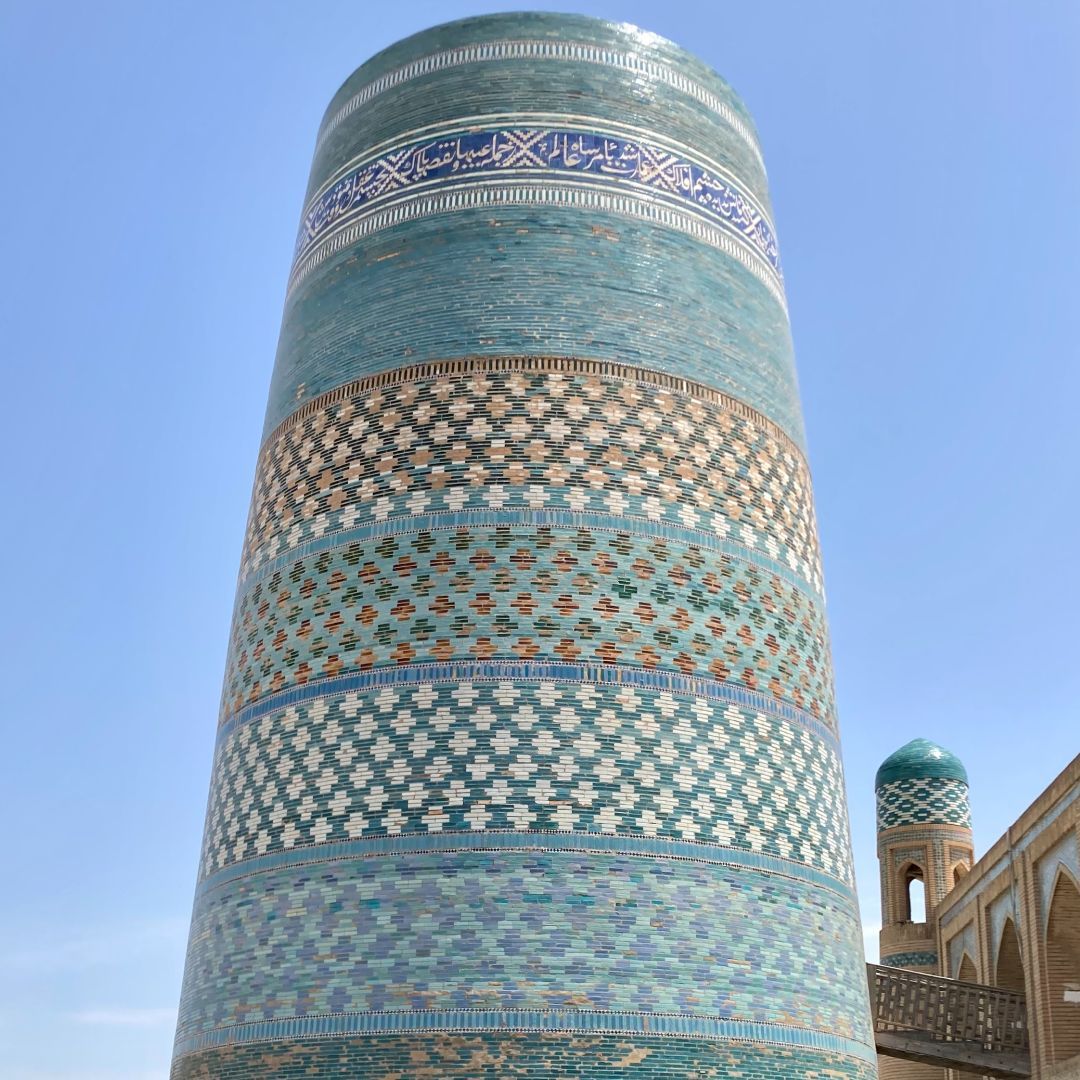
Kalta Minor Minaret

Kalta Minor is a memorial minaret located in front of the Muhammad Amin Khan Madrasa (sometimes considered part of it). It was created by Muhammad Amin Khan, the Khan of the Khanate of Khiva, as the largest and tallest minaret in the Muslim world. The original plan was for the minaret to reach a height of 70–80 meters, but construction was suddenly stopped when it reached a height of 29 meters. Geometric patterns are repeatedly used in the decoration of the minaret. Inside, there is a wooden staircase leading to the top. White, green, and turquoise tiles are used in the decoration (it is also called the Blue Minaret due to the frequent use of turquoise tiles). Kalta Minor is famous not only for its shape, but also for its incompleteness and unique decorations.Although it has never been used for its intended purpose, the Kalta Minor minaret represents a unique attraction of great artistic value that surprises and pleases tourists and locals alike, and is a kind of reminder of the great history and collapse of the powerful state of Khiva.

Madrasa of Mokhamed Amin-Khan

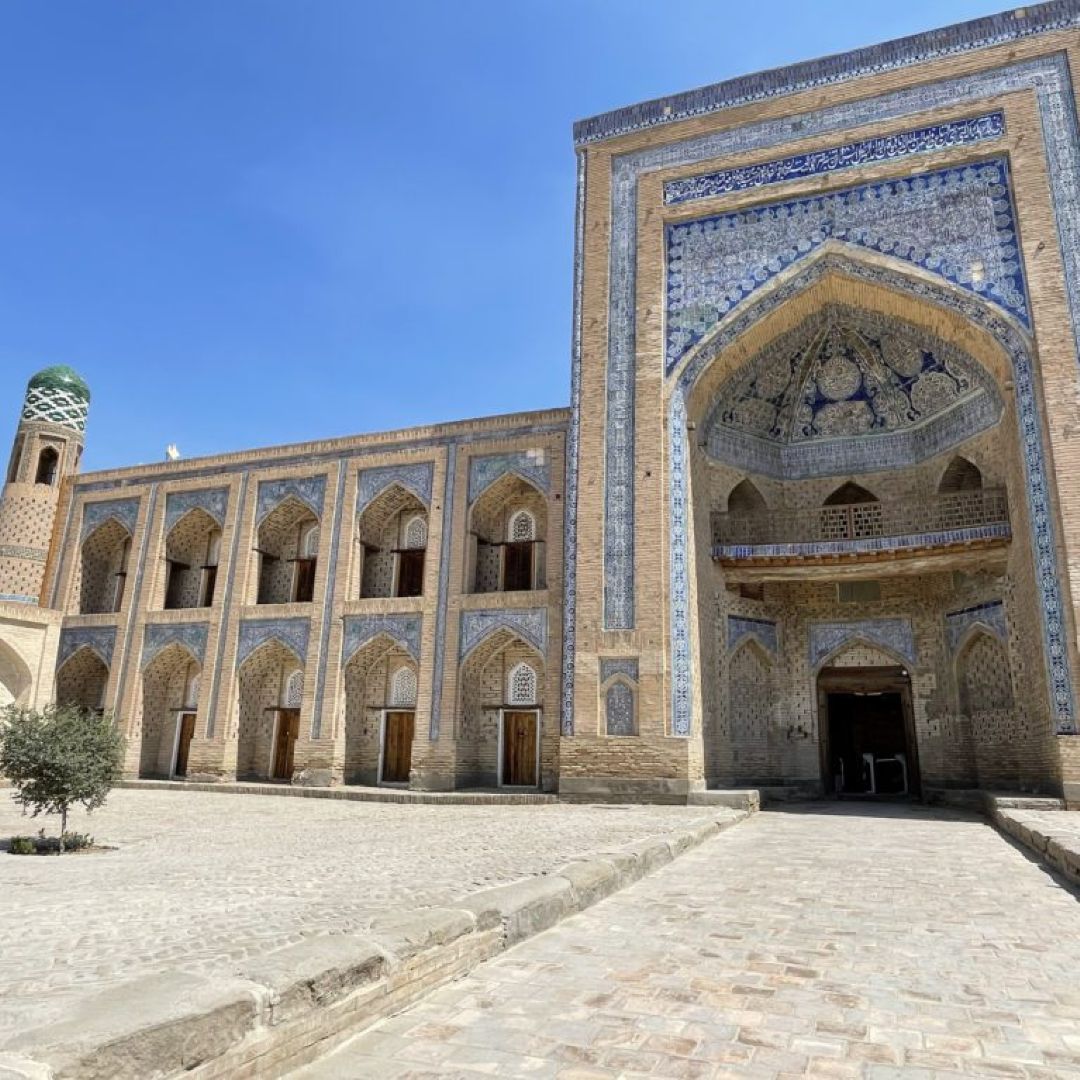
Located in the historic district of Itchan-Kala, the Mokhamed Amin-Khan Madrasa is one of Khiva's most prominent landmarks and the largest madrasa in Central Asia. This two-story building, built between 1851 and 1854 by order of Khiva's ruler, Mokhamed Amin-khan, has an area of 72 by 60 meters and contains 125 khudjras (cells) designed to accommodate 260 students. A unique feature of this madrasa is that each khudjra consists of two rooms, with those on the second floor including a room and a loggia facing the façade. The architectural design of this madrasa is highlighted by its five domes and side towers. The façade is richly decorated with glazed brick ornaments, and the wooden doors are adorned with intricate carvings. The majolica cladding is particularly impressive, featuring herbaceous motifs. Above the entrance, an Arabic inscription reads: "This wonderful building will remain here forever, for the joy of its descendants."Historically, the Mokhamed Amin-khan Madrasa was one of the wealthiest educational institutions, with numerous wakf lands. It also housed the Chancellery of the Supreme Muslim Courtyard. Today, the building has multiple uses, including a hotel, a currency exchange office, and a cafe. Despite these modern uses, the madrasa has retained its historic appearance and continues to impress Khiva residents and visitors with its grandeur.In 1990, it was included on the UNESCO World Heritage List as part of Itchan Kala.

Mohammed Rakhim Khan Madrasa

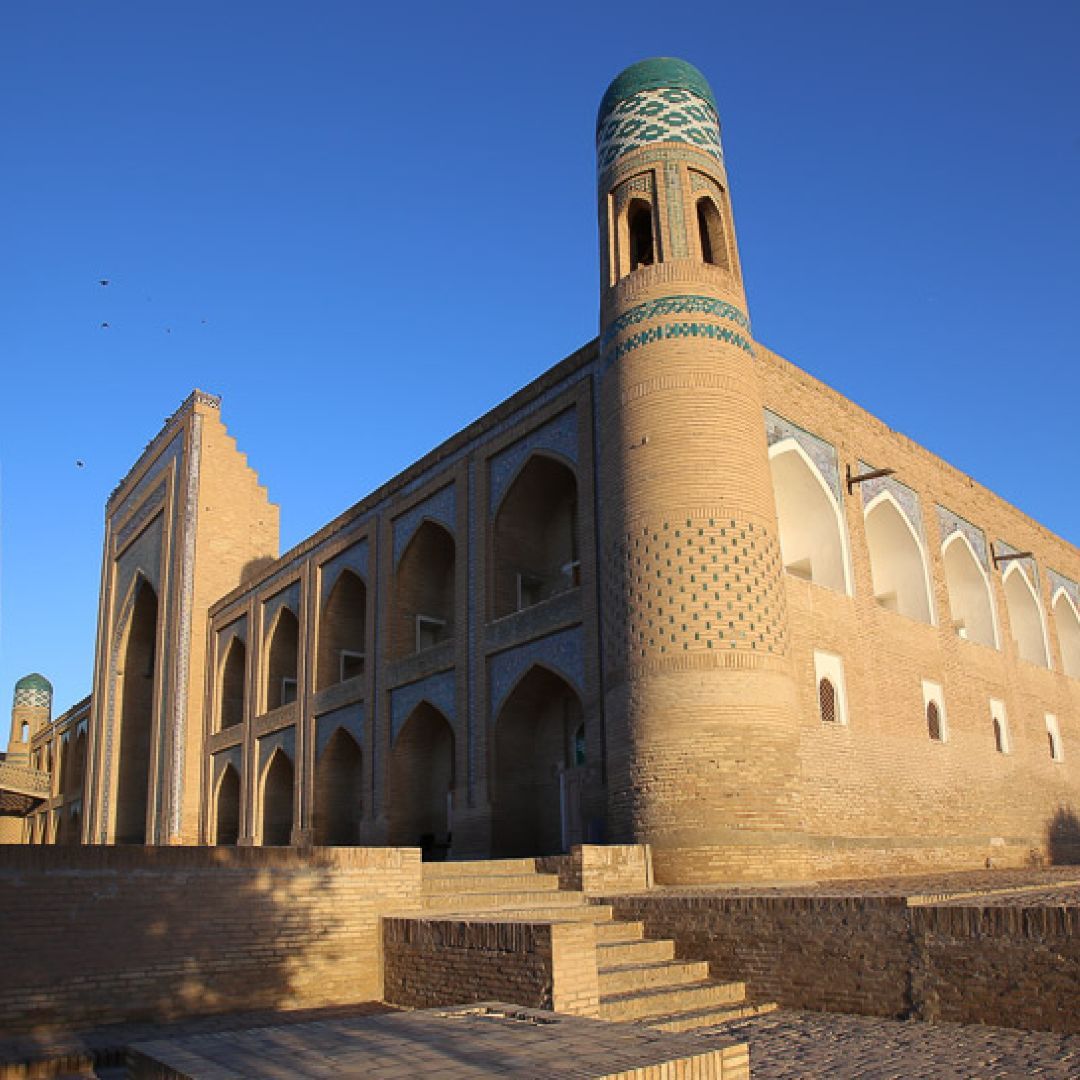
Built opposite the Konya Ark Citadel, the Mohammed Rakhim Khan Madrasa was completed in 1876 and is a brilliant example of the architectural culture of that era. The madrasa looked like a two-story building with a tall entrance portal. A unique feature was that this large madrasa had two courtyards, one of which had four aivans with four small turrets at the corners, and there were 76 hudjrs (inner living rooms) inside. It also had darskhona, summer and winter mosques, and an extensive library. The educational process at this madrasa differed from traditional education at other Islamic universities in that it was largely facilitated by Mohammed Rakhim Khan himself, a well-educated and enlightened monarch who used to write poems under the pen name Feruz. He often personally participated in discussions with the madrasa students. It went beyond conventional religious teachings and offered a curriculum with a wide range of subjects. The Mohammed Rakhim Khan Madrasa has an entrance from the street, which leads to a courtyard surrounded by a white wall from the outside and surrounded by one-story hujras (cells) on the inside. In addition, in this courtyard is the two-story main building, with a large portal of the central facade of the madrasa. Each small corner tower is completed with a dome decorated with green mosaic. The facade of the madrasa is mainly covered with white and blue majolica, which is also often used in the decoration of tympanums and columns. Above the main entrance, the aivan roof and the vaults of the loggias are clad with figured bricks.

Kunya Ark Castle

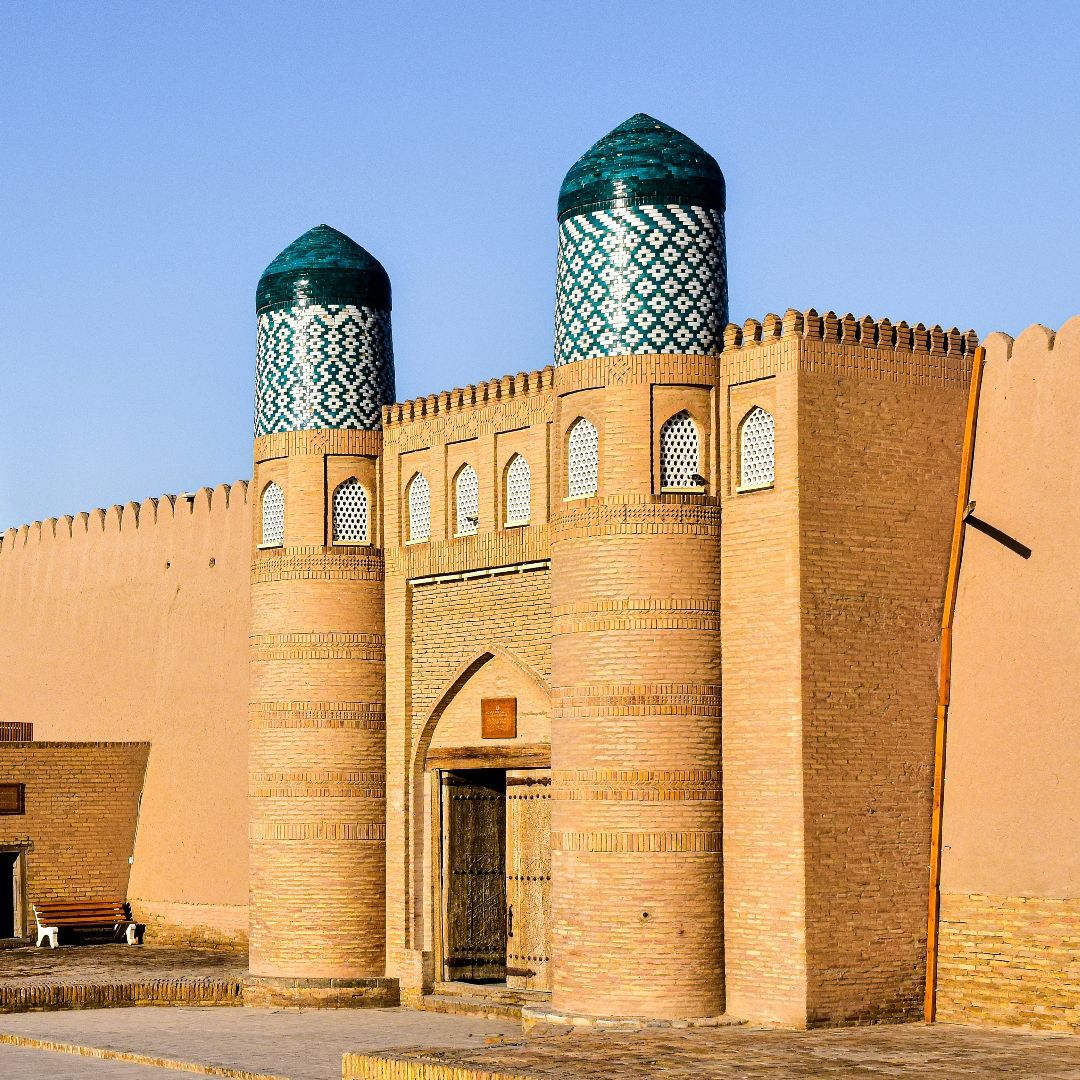
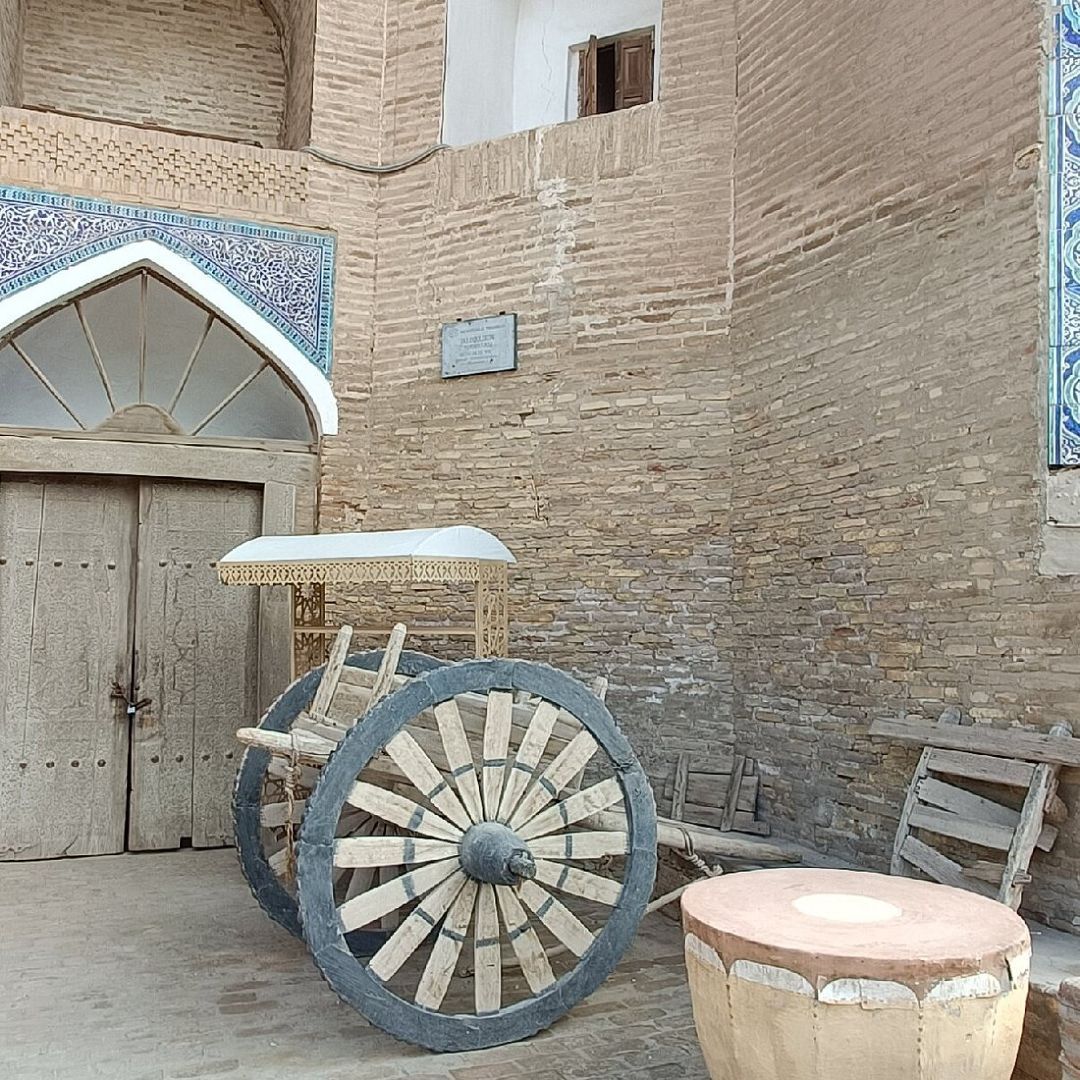
It is the citadel of the khans of Khiva. Since the end of the 18th century, it was a protected fortress, representing a city within a city and located behind double adobe walls, that is, behind its own walls and the walls of Ichan-Kala.In the years 1686-1688 the penultimate representative of the Sheibanid dynasty in the Khiva Khanate - Hudaydad Khan, the son of Anusha Khan, began the construction of Kunya Ark, which lasted until the second half of the 19th century, when as a result of the construction boom, many old buildings were restored and rebuilt, which had been damaged by the invasion of Iranian troops in the 18th century. Of the ancient residence of the Khans, only a few buildings have survived to this day: the Eastern Gate with the adjacent guard room, the Kurinishona (reception hall), the Ak-Sheikh Bobo bastion, the Winter and Summer mosques, and the harem. The overall finish is wonderful, as is the excellent woodcarving that decorates the doors, columns, and balconies of the buildings preserved in the Kunya-Ark fortress. The whole ensemble gives the impression of being inside a precious box. The special local color and the spirit of history that is felt within the walls of the citadel help to better understand this mysterious Eastern land.

Juma Mosque

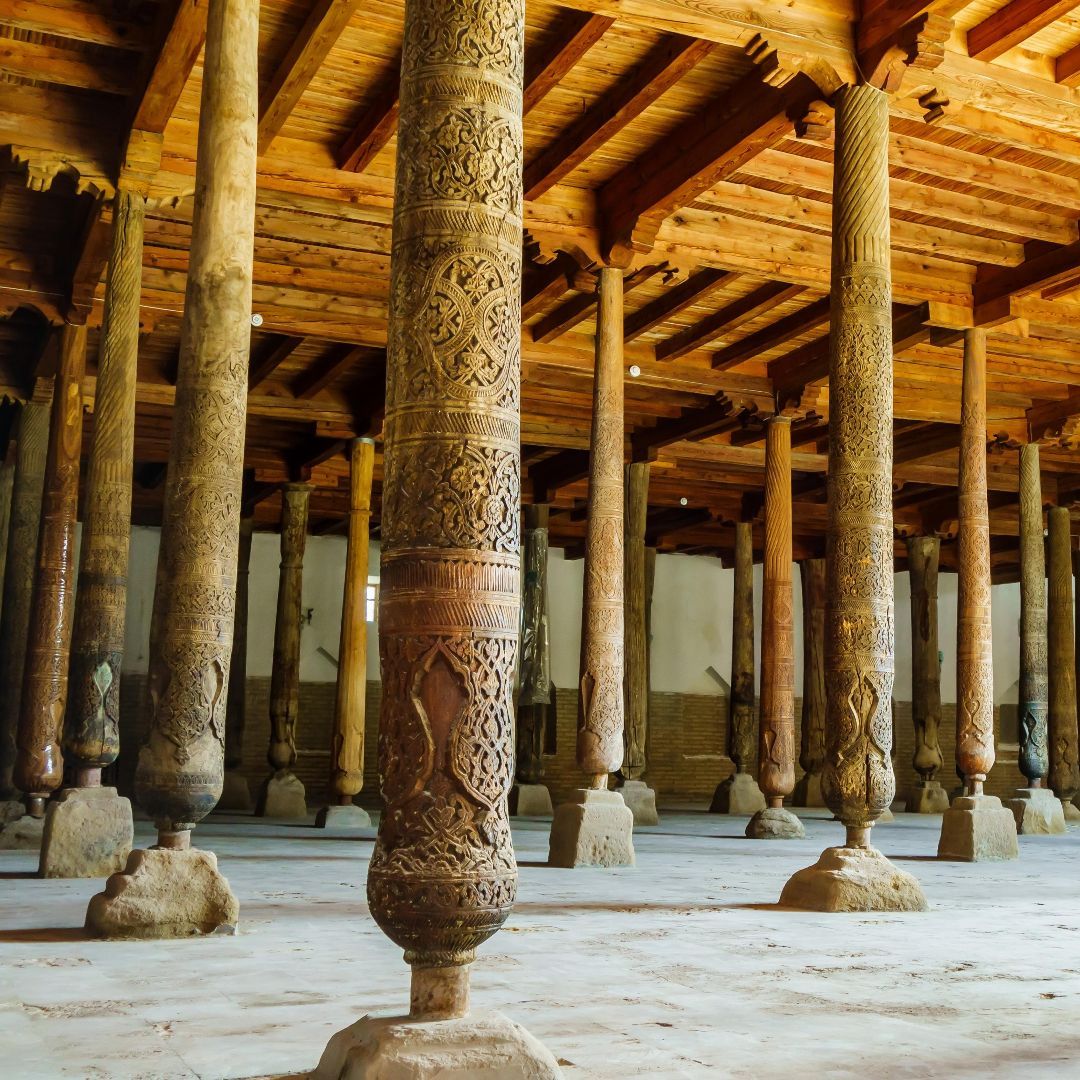
The Juma Mosque, or Friday Mosque, is located in the center of Ichan-Kala and is the most important of all the mosques in Khiva, a must-see within the city's historic center. Originally built in the late 18th century on the remains of earlier structures, this mosque is distinctively unique in its design, as it lacks portals, domes, galleries, or courtyards. With an impressive area of 18 by 55 meters, the mosque allows entry from all four cardinal points and faces an imposing 46-meter-high minaret on its northern facade, visible from one of the city's main streets. The interior, surrounded by solid brick walls, is a large, single hall with a flat ceiling supported by 212 carved wooden columns. This architectural style, which has been seen throughout history around the world, displays a magnificent use of space and design, reminiscent of mosques from the 10th and 12th centuries, but the construction and decorative elements of the Djuma Mosque display a distinctly local style.

Madrasa and Minaret of Islom Khodja

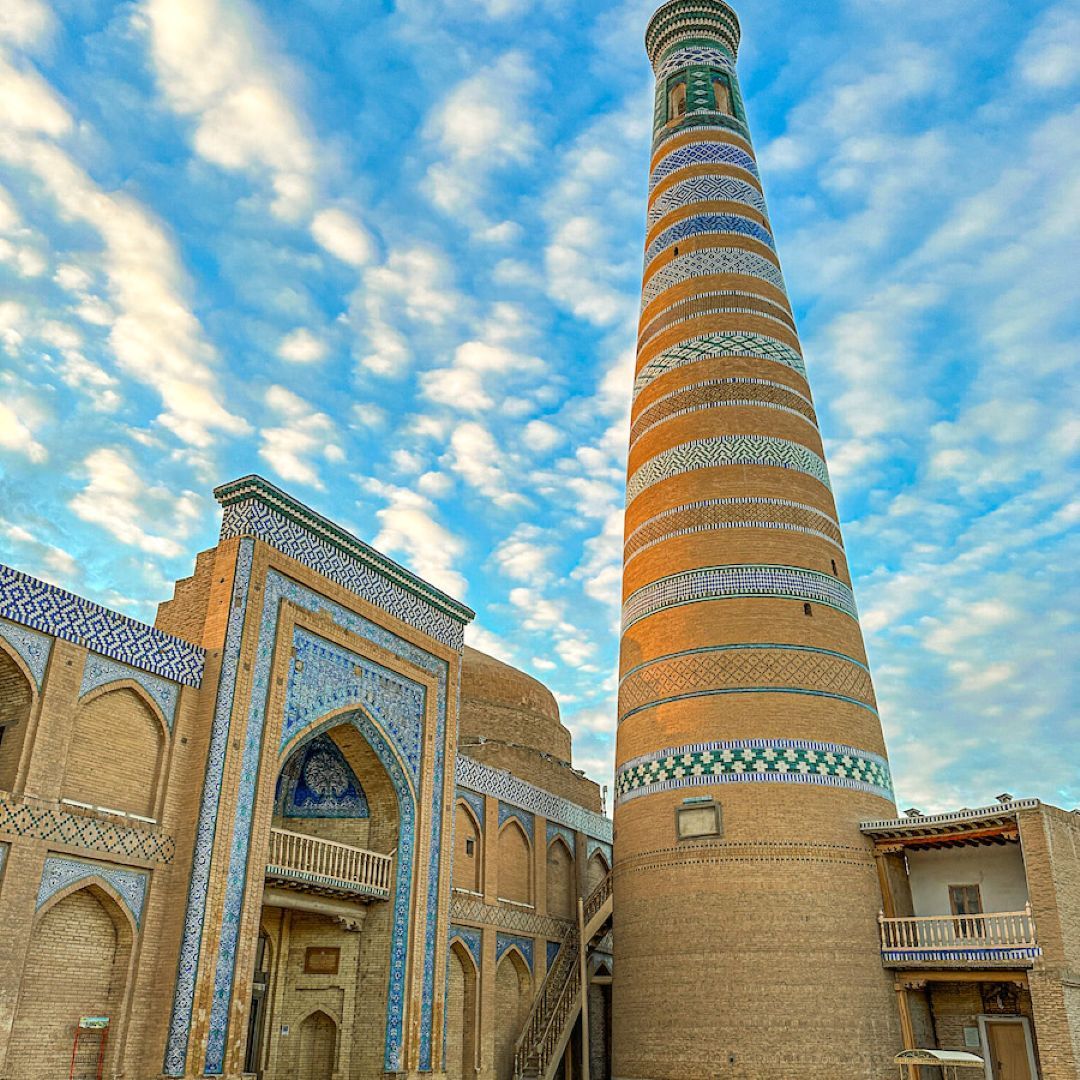
In the heart of Khiva (in the center of Itchan Kala), in the Islam-Khodja complex, we find the minaret and the madrasa, both sharing architectural beauty and history, the result of the initiative of Islam-Khodja, father-in-law and main vizier of Asfandiyar Khan, sovereign of the Khanate of Khiva. It could be said that this complex is practically modern, since it dates from the beginning of the 20th century.The minaret, with a height of 56 meters and narrowing at the top, shows us the first examples of 14th-century architecture. Built with bricks alternating with bands of glazed patterns, forming decorative belts of blue and white ceramic. This minaret dominates the part of the city in which it is located and concentrates thousands of domes and vaulted structures around it.The madrasa is located behind the minaret and consists of 42 hujras and a large vaulted hall. The builders' skills are demonstrated in contrasting combinations of architectural forms, skillfully utilized in a limited space. The mihrab niche is decorated with majolica and ganch, while the facade is decorated with enamel.

Allakuli Khan Madrassah and Caravanserai

The madrasa was built in 1834-1835 with the help of Allakuli Khan, who ruled Khiva at the time. It is considered one of the finest examples of Khorezm architecture from the late Middle Ages. The madrasa harmoniously combines traditionalism, proportionality, and spaciousness. The rather austere, yet surprisingly elegant, decoration of the portal and arched niches is used, featuring traditional Khorezm majolica in blue, white, and black tones. In the 19th century, the ground floor of the madrasa housed the city library, which was in great demand among students of all the madrasas in Khiva. Today, the Allakuli Khan Madrasa houses the Museum of the History of Medicine, named after Abu Ali Ibn Sina. The caravanserai was built in Khiva in 1832-1833, during the reign of Allakuli Khan, and is similar in layout to a madrasa. The main corridor of this building leads to the courtyard. The caravanserai has two floors, and the khudzha (cells) are located around the courtyard. The cells on the first floor served as living quarters, and the cells on the ground floor served as warehouses. At that time, trade relations between Khiva and Bukhara, Persia, and Russia were flourishing. Therefore, it was decided to begin construction of a comfortable caravanserai where merchants from other countries could live and, at the same time, store and sell their goods. In this way, the caravanserai building combined the functions of an inn, warehouse, and market, and also had special entrances for pack animals.

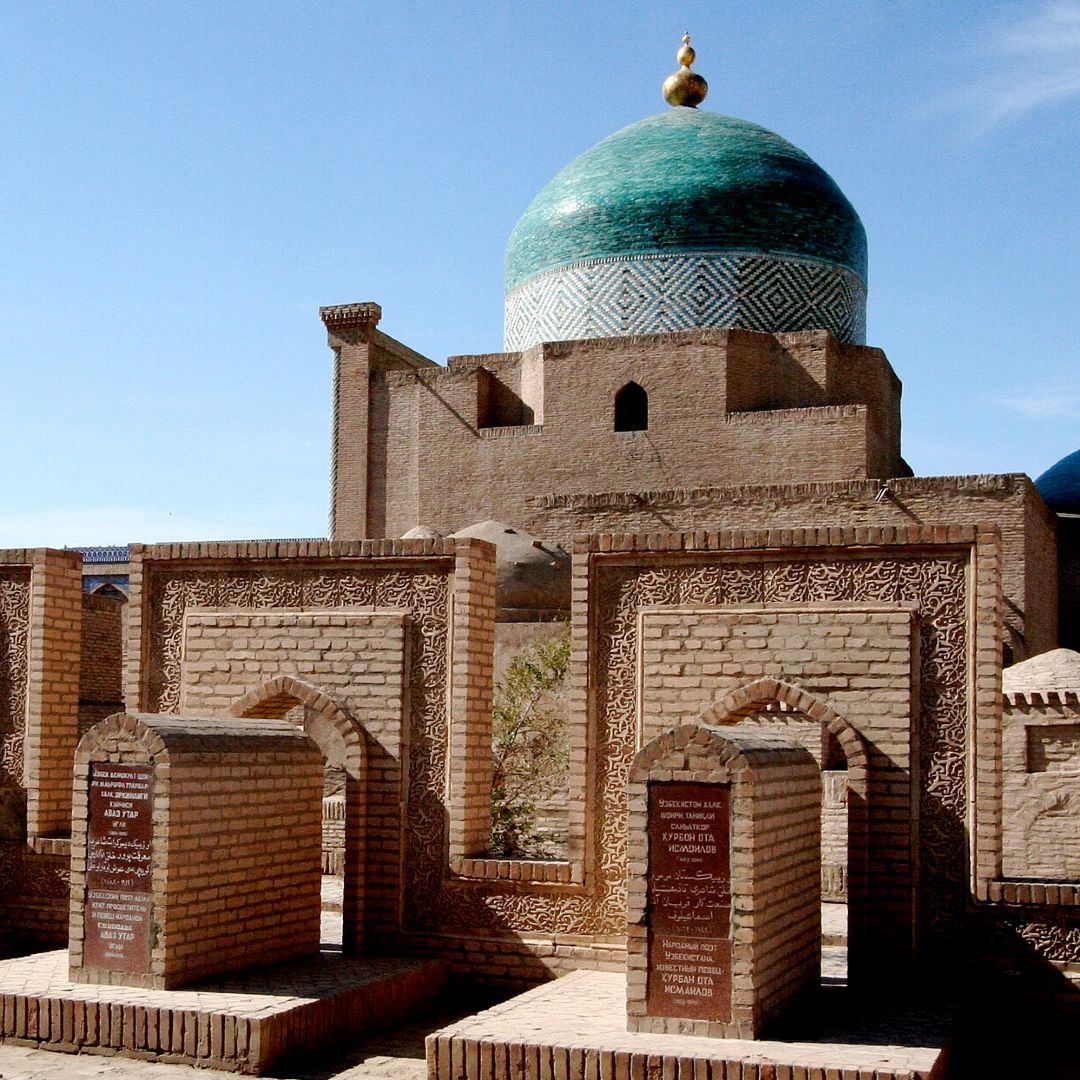
Mausoleum of Pakhlavan Makhmud

The Pahlawan Makhmud Mausoleum is a memorial built around the tomb of Pahlawan Makhmud, venerated as a saint who lived during the Mongol period from 1247 to 1326 and known as a wrestler, poet, philosopher, and teacher of Sufism. The necropolis of the Khans of Khiva is located around it. Between the 14th and 17th centuries, a cemetery was built around the mausoleum. In 1810, Khan Muhammad Rahim I (reigned 1806 to 1825) had the tomb remodeled and the central mausoleum built. The new building included the old tomb and a khanqah with a high dome, whose striking shape is one of the symbols of Khiva. Another cemetery was established opposite the entrance to the mausoleum, and the gates of the old cemetery became the entrance portal. Between 1910 and 1920, the Qarikhan Mosque was built on the western wall of the courtyard and a summer mosque on the eastern wall.

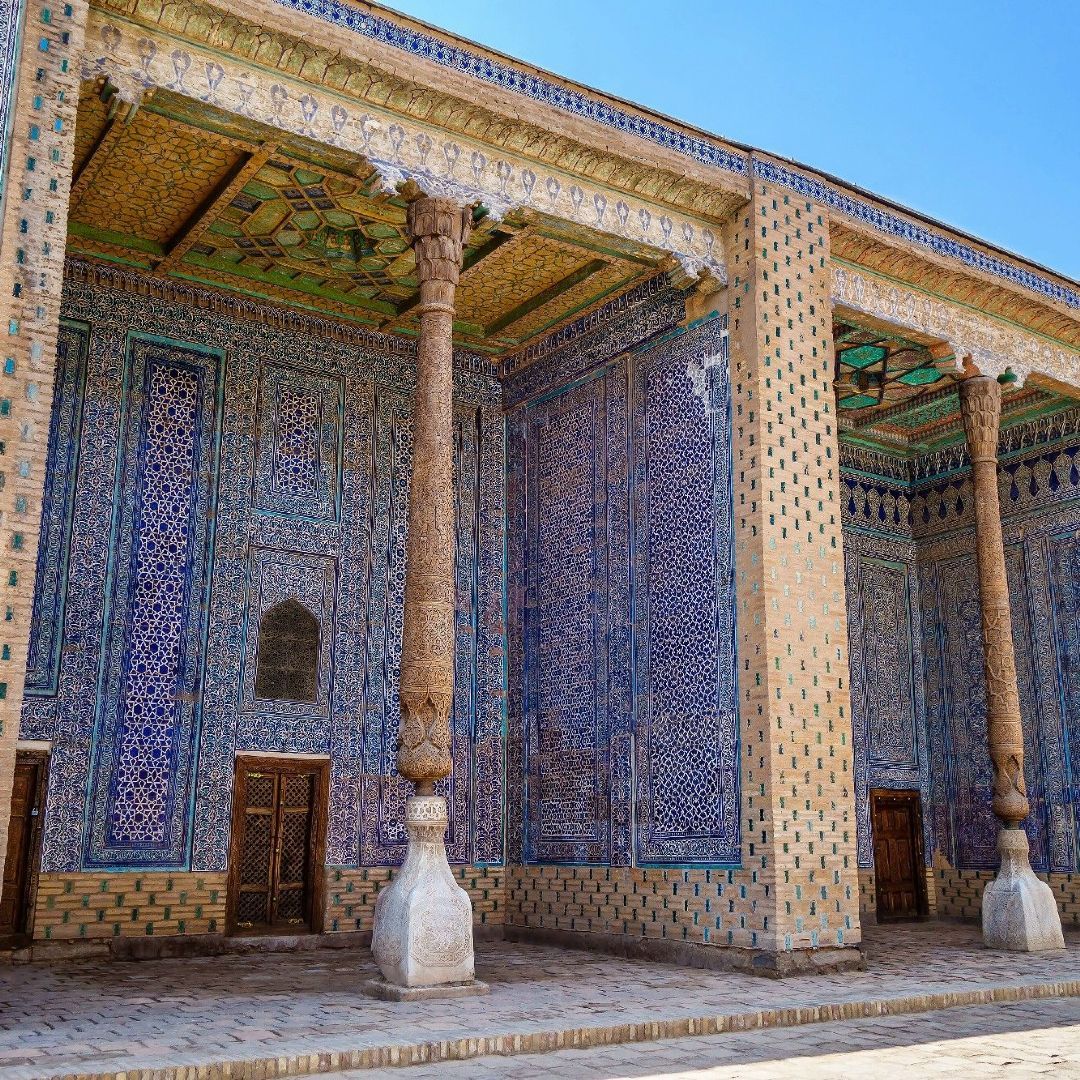
Tash Hovli Palace

The Tash-Khovli Palace (Stone Estate) was built in the first half of the 19th century, in the eastern part of the city center. Initially, it contained 163 rooms and three courtyards: a harem, a mehmonkhona (guest quarter), and an arzhona (audience hall). In the southern part of the harem courtyard, small aivans were built for the khan's wives. The most richly decorated aivan served as the khan's living room. Each aivan in the harem is a masterpiece of Khiva applied art. Its walls, ceilings, and columns are covered with non-repeating ornamental patterns. The majolica wall panels have a traditional blue-and-white color, the ceilings are painted with reddish-brown paint, and the windows are closed with openwork copper grilles. The aivans in the guest quarters are decorated with majolica and have small towers on the sides. The audience hall is located in the southwest part of the palace.The most complex ornamental motifs were used in the palace's decoration. All architectural elements are efficient and elegant. The exterior facades are not clad, but the courtyard walls are separated into panels and decorated with majolica. The geometric and organic decorations on the carved marble bases and wooden pillars, and the majolica slabs are replete with epigraphic narratives about the history of the Khiva khans. Thanks to such exquisite architecture, complemented by rich decoration, the Tash Khovli Palace is a masterpiece of 19th-century Khiva architecture.
prev
next

Destinations related to Khiva

Uzbekistan

prev
next
[email protected]
+34 952 386 777
Circuits
Getaways
Beaches
Safaris
Combined
Special departures
Weekends
Extensions from Marrakech
Mini-vacations
Private circuits
Sports
Special May bank holiday
Destinations
Trips of more than a week
Trips of less than a week
one week trips
A couple
Families
  • ES
  • PT
  • EN
  • FR
Luxotour
Copyrights © LUXOTOUR S.A.U - AN -2906 1-1
General conditions
Privacy Policy
Legal notice