The best plans to discover Uxmal
Mexican Express
11 nights€2,550per person
Mayan Mexico
8 nights€2,689per person
Ancient civilizations of Mexico
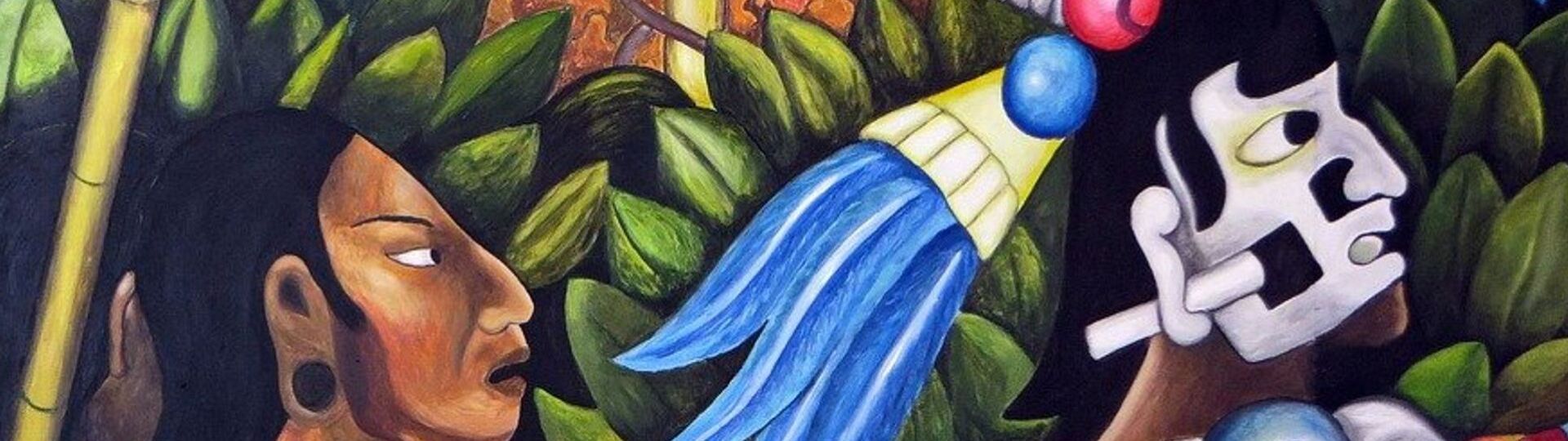
This program presents us with a melting pot of cultures, ancient civilizations of Mexico that are still alive thanks to their customs and traditions that are passed down from generation
16 nights
Archaeological Mexico
14 nights
Mayan Land
9 nights
What to see in Uxmal?
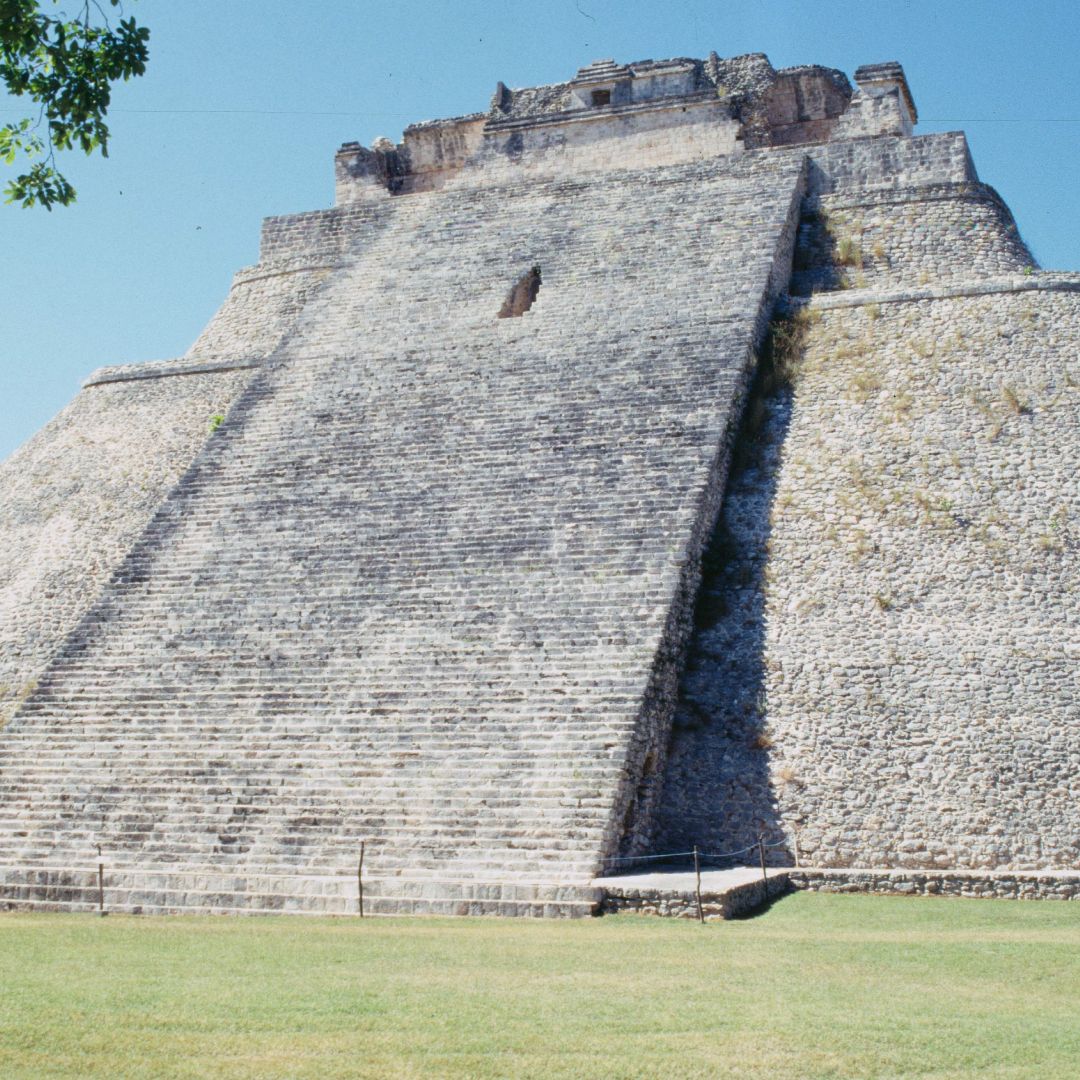
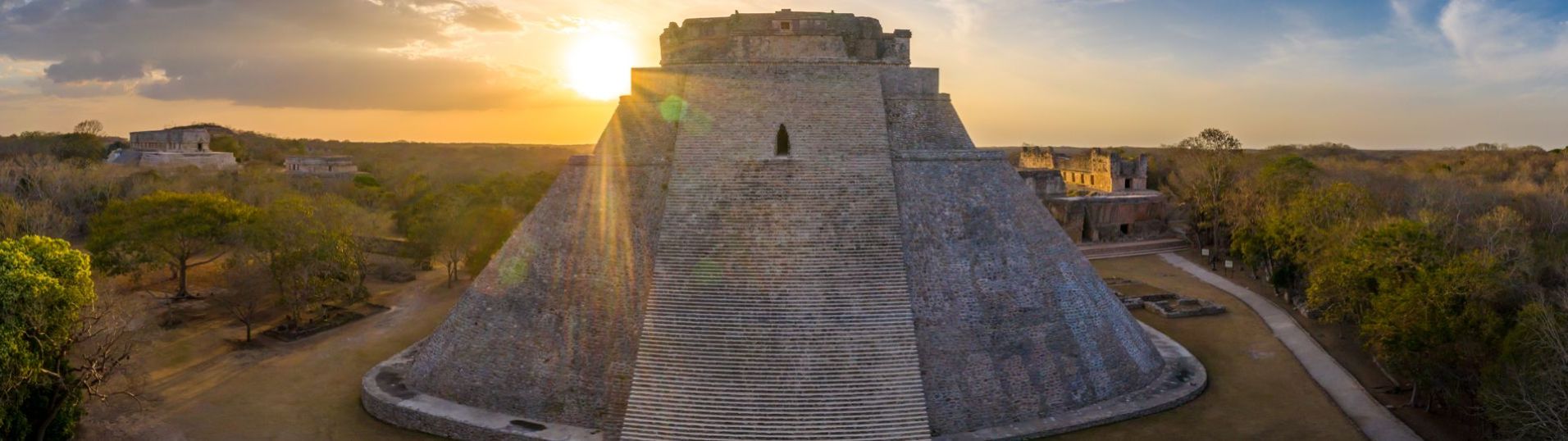
Pyramid of the Diviner
It is the largest monument in the city. It has a height of 35 meters and a width of 53.5 meters. It consists of 5 different structures from different periods, each of them has its own temple. It stands on a plinth or sidewalk that surrounds the construction. Construction began in the 6th century and the last level dates from the 10th century. The existing hieroglyphs have helped to date each of the construction periods. It is the only known temple with an oval floor plan in the Mayan culture. Another characteristic of this temple is that the figurehead, the god of rain, coiled snakes and bands forming crosses appear on the façade.
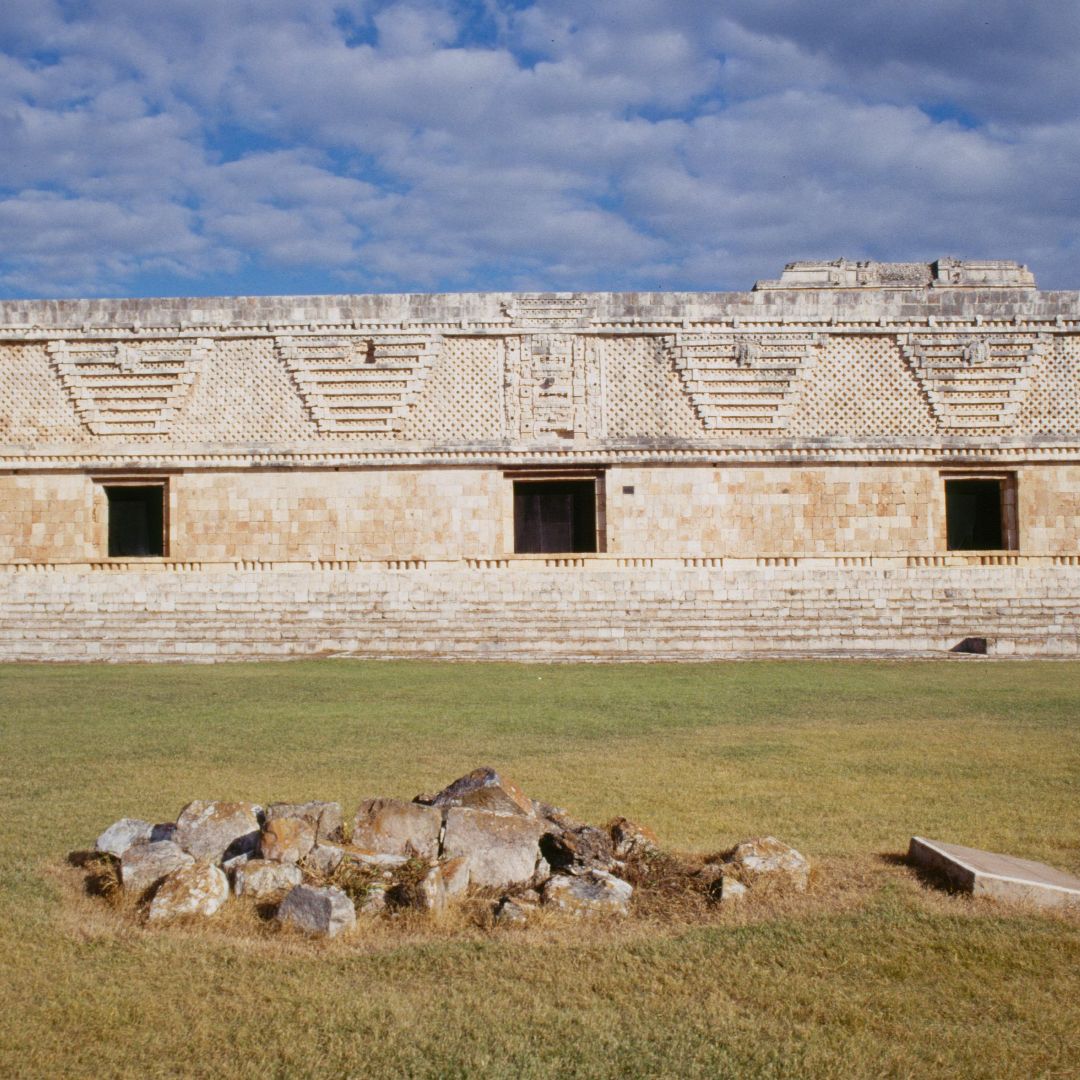
Quadrangle of the Nuns
It is a large patio located on a large square platform measuring 120 meters on a side. On each side there are buildings that have a large number of rooms that open onto the patio. This fact led to it being compared to a convent, hence it adopted the name “House of the Nuns”. The decoration of the buildings follows the line of the purest Puuc style. The lower walls are smooth while the upper ones have very rich ornamentation. In the corners there are Chaac masks and snake heads.
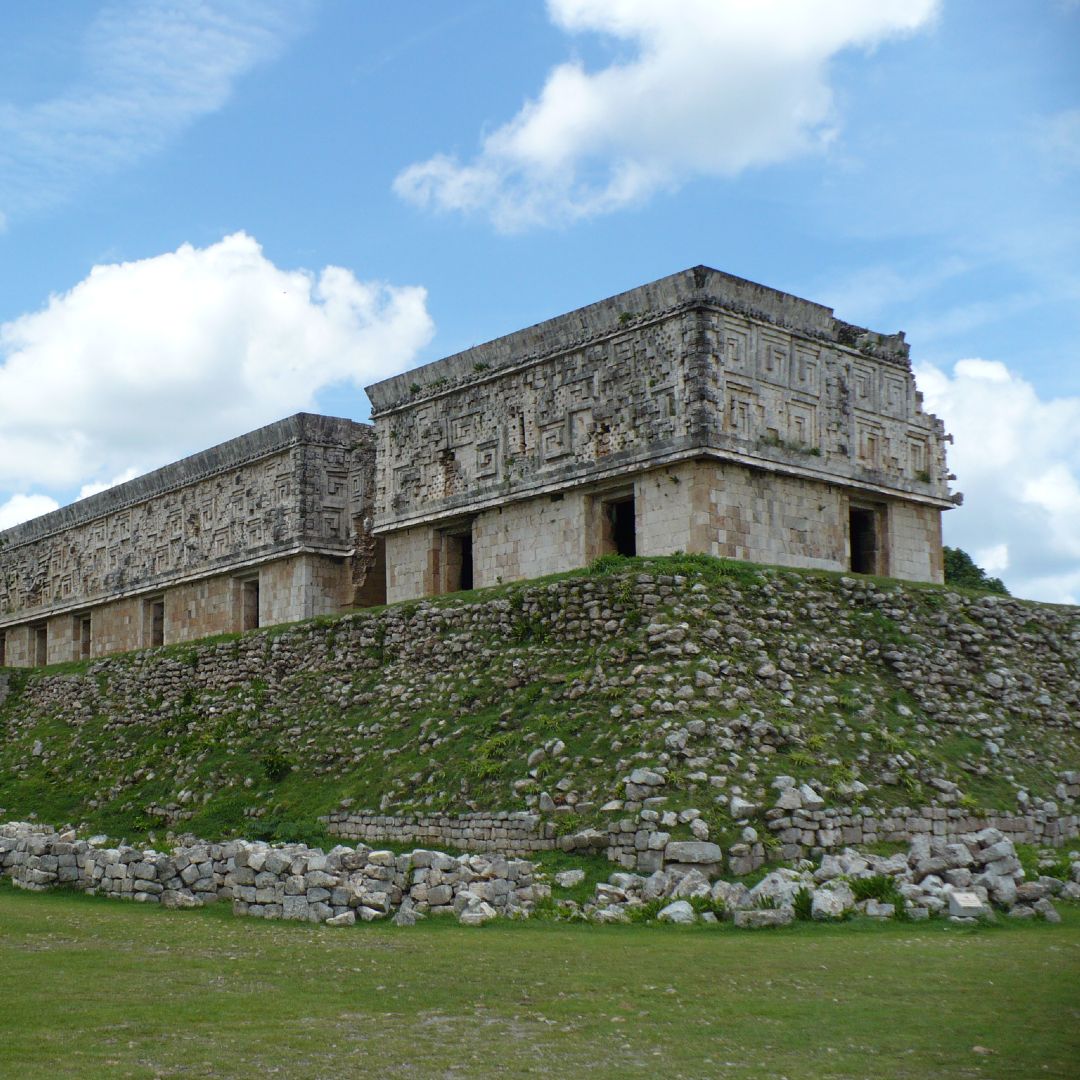
Governor's Palace, Uxmal
On a large platform made up of 3 terraces, surrounded by a plain, stands this building that is, together with the Pyramid of the Fortune Teller, the most prominent in the city and in Mayan architecture and is considered one of the summits. architectural works of Ancient Mexico. It measures almost 100 meters long by 12 wide and 9 high and consists of 3 independent bodies, the central one is a rectangular building that has 14 accessible chambers, 11 of them from the outside; and on both sides there are separate buildings that are linked to the central one by vaulted galleries. It is oriented towards the main pyramid of Cehtzuc, a small site located at a distance of almost 5 kilometers.
prev
next